
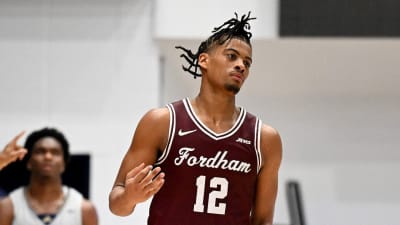
The notion that college sports operate on a pristine level of competition, free from the corrosive influence of gambling, has been shattered once again. Two former Fordham University basketball players, Elijah Gray and Will Richardson, have been permanently barred from NCAA competition, not for poor performance, but for their alleged involvement in a sophisticated game-fixing scheme tied to illegal sports betting. This ruling sends a stark warning across collegiate athletics: the lure of illicit money poses a significant and persistent threat to the very fabric of the games we watch. The NCAA's extensive investigation, spurred by an overheard conversation involving a third-party student-athlete, uncovered a disturbing pattern of communication and financial incentive. Investigators identified a direct link between Gray, Richardson, and a known bettor who has since been indicted on serious fraud and bribery charges. This wasn't a case of a casual wager; the NCAA found evidence of a substantial $10,000 bet placed on a February 2024 game involving Fordham, specifically betting on the opposing team to win. The connection solidified when enforcement staff cross-referenced social media connections between players on the roster and this individual, specifically identifying Gray and Richardson. What elevates this case beyond a simple infraction is the alleged financial transaction at its core. Elijah Gray himself admitted to NCAA investigators that he and Richardson had exchanged messages with Antonio Blakeney, a former NBA player and the alleged central figure in the betting scheme. Gray reportedly stated that both players had agreed to intentionally underperform, or "throw" the game, in exchange for promised payments of $10,000 to $15,000 each. This admission paints a grim picture of deliberate intent to manipulate athletic contests for personal financial gain, undermining the trust placed in these student-athletes. However, Gray's account introduces a crucial point of divergence. He claims that he ultimately reconsidered the arrangement and played with his usual effort, leading to Fordham actually winning the game despite the initial agreement to lose. This detail, if true, suggests a complex internal struggle and a last-minute change of heart that potentially thwarted the full execution of the scheme. It raises questions about the extent of the alleged manipulation and whether the intended outcome was truly achieved, even if the intent was demonstrably present. Will Richardson's response, or lack thereof, stands in stark contrast. According to reports, Richardson did not cooperate with NCAA investigators and denied being part of any incriminating calls involving Gray and the known bettor. This refusal to engage with the investigation complicates the narrative and leaves lingering questions about his precise role and knowledge. Non-cooperation, while not an admission of guilt, often leads to harsher penalties and can be interpreted as an attempt to obstruct the truth-finding process. The broader context of this scandal cannot be ignored. We are witnessing an escalating trend of sports betting permeating collegiate athletics, a phenomenon amplified by the proliferation of legal sportsbooks across the United States. The NCAA's own data has indicated a significant increase in student-athletes engaging in betting, raising alarms about potential corruption. This Fordham case is not an isolated incident; it is a symptom of a larger, systemic challenge in safeguarding the integrity of college sports in an era where gambling is increasingly normalized and accessible. Expert analysis suggests that the accessibility of sports betting apps and the constant promotion of wagering create an environment ripe for exploitation. Dr. Evelyn Reed, a sports ethics professor at Northwood University, stated, "The lines between fan engagement and illicit betting have become blurred. When student-athletes are exposed to such easy access and potential financial rewards, the temptation to compromise their performance becomes a very real danger that institutions must actively combat." This ban represents the NCAA's strongest deterrent against such egregious violations. Lifetime ineligibility is a severe consequence, designed to send an unequivocal message to current and future athletes about the non-negotiable standards of fair play. It also highlights the evolving enforcement mechanisms within the NCAA, which are now more actively collaborating with state gaming commissions and law enforcement agencies to track betting patterns and identify potential malfeasance. Moving forward, the focus must shift to proactive measures. Universities and athletic departments need to redouble their efforts in educating athletes about the severe risks associated with sports betting, including the NCAA's stringent rules and the potential for life-altering consequences. Enhanced monitoring systems and a culture of vigilance among coaches, staff, and fellow athletes will be crucial in identifying and reporting suspicious activities before they can escalate into full-blown scandals. The integrity of college sports depends on it.
In Brief
Two former Fordham basketball players are banned for life by the NCAA for their alleged roles in a game-fixing scheme tied to illegal sports betting, raising serious questions about integrity in college athletics.Advertisement




Comments
No comments yet. Be the first to comment!