
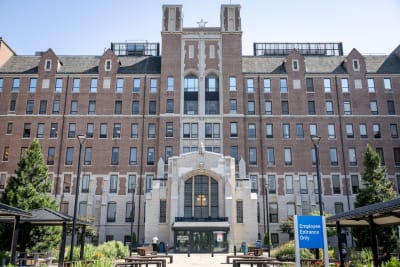
The air in Springfield, Massachusetts, buzzed with a mixture of relief and apprehension this past Tuesday as news broke: Baystate Health, a dominant regional player, was finalizing its acquisition of Mercy Medical Center. This wasn't a sudden development, but rather the culmination of years of quiet negotiations, a testament to the increasingly precarious financial realities facing independent hospitals. The announcement arrived like a much-needed lifeline for Mercy, an institution deeply woven into the fabric of the community since its founding in 1874, and a stark indicator of the seismic shifts occurring within the American healthcare industry. For months, whispers of Mercy's financial instability had circulated, painting a grim picture of an institution struggling under the weight of a patient population heavily reliant on government reimbursement programs like Medicare and Medicaid. These programs, while vital for access, often reimburse at lower rates than private insurance, creating a persistent financial squeeze for hospitals serving a significant number of vulnerable individuals. The specter of closure loomed large, a prospect that local leaders, including Springfield Mayor Domenic J. Sarno, deemed “unacceptable.” The potential loss of Mercy wasn't just about a healthcare facility; it represented the risk of widespread job losses and a critical gap in essential services for thousands of residents. State Representative Orlando Ramos, whose district encompasses both Baystate Medical Center and Mercy, articulated the prevailing sentiment among many: this acquisition, while perhaps not ideal, represented the “best-case scenario” given the dire alternative. His primary concern was preserving both campuses and ensuring continued access to care for his constituents. The agreement, facilitated by extensive discussions with the state administration, particularly Governor Maura Healey’s office, underscores the collaborative effort required to navigate such complex healthcare transitions. Healey's statement highlighted the administration's commitment, emphasizing their work to ensure Mercy's continued operation, a crucial detail for a region that cannot afford to lose such a vital resource. Baystate Health's existing dominance in the region is a significant factor in understanding the implications of this deal. Already the fourth-largest hospital in Massachusetts, Baystate commands an impressive 65% of the inpatient market share in Central and Western Massachusetts. As the largest employer in the area with approximately 13,000 staff, its influence extends far beyond patient care into the economic vitality of the region. This consolidation means that an even larger portion of healthcare services and employment will now fall under a single umbrella, raising questions about market competition, pricing power, and the future of healthcare innovation within Western Massachusetts. While both Baystate and Mercy have assured the public that no immediate staffing changes are planned, the accompanying online FAQ offers a carefully worded caveat: they cannot guarantee that no one will lose their job as the transition unfolds. This ambiguity is a source of anxiety for the hundreds, if not thousands, of employees at Mercy. The organizations have committed to making staffing decisions “thoughtfully with open communication,” but for those whose livelihoods are on the line, such assurances may ring hollow without concrete guarantees. Representative Ramos has, however, been privy to discussions suggesting a plan to potentially increase staffing levels post-transition, a detail that offers a glimmer of optimism amid the uncertainty. The broader systemic issue this acquisition brings into sharp focus is the unsustainable financial model for many non-profit hospitals, particularly those serving populations with high rates of Medicare and Medicaid enrollment. The reimbursement structures simply haven't kept pace with the escalating costs of healthcare – from labor and supplies to the advanced technologies required for modern medicine. This forces institutions into a difficult choice: merge with a larger entity, seek significant operational efficiencies that can impact services or staffing, or face the ultimate consequence of closure. The situation at Mercy is not an isolated incident; it’s a microcosm of a national trend where hospital consolidation is becoming the norm, driven by financial pressures and the pursuit of economies of scale. This story resonates deeply because it touches upon fundamental anxieties about access to healthcare, job security, and the economic health of communities. For residents of Springfield and surrounding areas, the prospect of losing a long-standing hospital is not abstract; it means potentially longer travel times for care, a reduced choice of providers, and the very real fear of economic disruption. The deal’s success hinges on Baystate’s ability to integrate Mercy’s operations effectively while maintaining the quality and accessibility of care that the community relies upon. The promise made by Peter D. Banko, president & CEO of Baystate Health, to ensure care is “compassionate, high quality, affordable” will be tested in the coming months and years. Looking ahead, the immediate focus will be on the seamless integration of Mercy’s operations into Baystate Health’s system, which officially takes effect on November 1st. Observers will be scrutinizing staffing levels, service offerings at both campuses, and any changes in patient access or wait times. Furthermore, the long-term impact on healthcare costs and competition within Western Massachusetts warrants close attention. The success of this consolidation will ultimately be measured not just by financial metrics, but by its ability to strengthen the healthcare infrastructure for the region and uphold the commitment to serving its diverse patient population effectively.
In Brief
Baystate Health's acquisition of Mercy Medical Center signals a major shift in Western Massachusetts healthcare. The deal, driven by financial pressures on Mercy, raises questions about competition, jobs, and future access to care.Advertisement




Comments
No comments yet. Be the first to comment!