
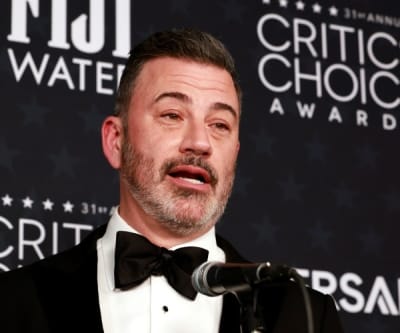
The current uproar surrounding a late-night television host's controversial remarks, and the subsequent demand for his termination by an adviser to former First Lady Melania Trump, echoes a long-standing tension between entertainment media and political discourse in America. For decades, comedians and late-night personalities have used satire as a potent tool to critique power, often pushing boundaries. However, this latest incident, involving an aide to Mrs. Trump, Mark Beckman, calling for ABC to fire Jimmy Kimmel over a perceived 'widow' joke, marks a significant escalation in the pushback against such commentary, particularly when framed as contributing to a hostile political climate. Beckman's intervention is not merely a personal grievance; it represents a strategic attempt to leverage the influence of a former First Lady's office to exert pressure on a major broadcast network. His public statement articulates a specific concern: that jokes, even those intended satirically, can have tangible consequences by fueling animosity and potentially inciting real-world threats. This argument gains traction in an era where political polarization is at a fever pitch, and the line between online vitriol and physical danger has become alarmingly blurred, especially for public figures like President Donald Trump, who has faced numerous threats. The significance of this moment is amplified by the broader context of media accountability and the power dynamics between celebrity figures, political elites, and broadcast corporations. Networks like ABC often find themselves caught in the crossfire, balancing the creative freedom of their talent with the need to avoid alienating advertisers and a significant portion of the viewing public. The pressure exerted by a former White House insider adds a layer of gravitas, suggesting that such commentary is no longer simply being shrugged off as the cost of doing business in the entertainment industry. This situation disproportionately affects those in the public eye, particularly those associated with the political sphere. While comedians aim to provoke thought or laughter through their observations, public figures, by definition, become subjects of scrutiny and, often, ridicule. The advisory role played by Beckman, ostensibly to protect Mrs. Trump's public image and legacy, highlights the perceived vulnerability of political families to the relentless barrage of media commentary, both news and entertainment. The argument is that these jokes, regardless of intent, contribute to a dehumanizing narrative that can embolden those with malicious intent. History offers parallels to this kind of friction. During the late 1970s and early 1980s, figures like Johnny Carson on "The Tonight Show" wielded immense influence, and while his humor was generally less overtly political than today's late-night hosts, any perceived slight against political figures could ignite public debate. More recently, the intense scrutiny and satirical attacks directed at politicians during impeachment proceedings and election cycles demonstrate how comedy can become a political weapon, sparking intense loyalty among supporters and fervent opposition from detractors. The social media dimension cannot be overstated. What might have once been a contained controversy between a publicist and a network now explodes across platforms like X (formerly Twitter) and Facebook. Public reaction is immediate and often tribal. Supporters of the former First Lady's orbit rally behind Beckman's call, viewing Kimmel's remarks as further evidence of media bias. Conversely, fans of Kimmel and those who champion free speech defend his right to comedic expression, often dismissing the complaint as an overreaction or an attempt to silence dissent. This digital amplification turns a single comment into a proxy battle for broader cultural and political divides. Examining potential solutions requires a nuanced approach. One path involves stricter network oversight, where ABC might implement clearer guidelines for its hosts, balancing artistic expression with reputational risk. Another avenue lies in public pressure, with advocacy groups or political factions organizing campaigns to influence advertisers or viewership. A more constructive, though perhaps less likely, solution could involve dialogue between media personalities and their subjects, fostering a greater understanding of the impact of their words. The challenge remains in finding a mechanism that addresses genuine harm without stifling legitimate satire. Looking ahead, the outcome of this demand will be closely watched. Will ABC bow to the pressure, potentially setting a precedent for future demands from political figures? Or will the network stand by its host, risking further backlash and potentially alienating a segment of its audience? The broader question is whether this incident signals a permanent shift in the relationship between political commentary and late-night entertainment, moving from sharp critique to a more guarded, or perhaps more aggressively combative, landscape.
In Brief
A former First Lady's aide is demanding a late-night host be fired, igniting a debate on political rhetoric and media accountability. This escalation echoes historical media-political clashes.Advertisement



Comments
No comments yet. Be the first to comment!