
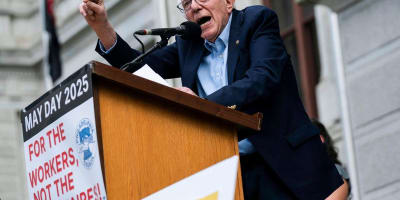
Are Democratic candidates truly beholden to the voters they seek to represent, or are they increasingly captive to the deep pockets of billionaires, corporations, and powerful special interest groups? This is the urgent question echoing through the halls of Congress and the digital town squares as a coalition of prominent Democratic senators launches a significant push to reform how campaigns are funded, particularly within the party's own primary contests. The move signals a growing internal schism over the role of money in politics, threatening to undermine the party's progressive ideals. This internal rebellion isn't emerging from a vacuum. For decades, the influence of corporate lobbying and wealthy donors has been a persistent thorn in the side of the Democratic Party, often pitting its grassroots activists against its more establishment-aligned leadership. The senators' current action builds upon years of frustration, recalling past battles over campaign finance reform and the increasing reliance on Super PACs and 'dark money' groups that operate with opaque funding streams. The very fabric of representative democracy is tested when the cost of entry into politics, and success within it, becomes astronomically high, favoring those with access to vast financial resources over those with compelling ideas and genuine public support. The current situation is stark. A formal letter dispatched to Senate Minority Leader Chuck Schumer and Democratic National Committee Chair Ken Martin outlines a clear and present danger: billionaire, corporate, and specific industry-funded Super PACs are actively shaping the upcoming electoral landscape. These groups are reportedly preparing to inject staggering sums into primaries, with crypto-aligned entities alone gearing up to spend an estimated $200 million. The artificial intelligence industry has already demonstrably poured over $185 million into political spending this year. These financial juggernauts aim to drown out grassroots movements and anoint candidates favorable to their economic agendas, often overwhelming the modest contributions of everyday citizens. Compounding this concern is the specific targeting of groups like the American Israel Public Affairs Committee (AIPAC). While the DNC recently passed a broad resolution condemning 'dark money,' this was seen by the dissenting senators as an insufficient response to the aggressive spending tactics employed by AIPAC and its affiliated organizations. Reports indicate that in recent Illinois primaries alone, outside groups funneled over $50 million, with AIPAC allegedly channeling nearly half of that through seemingly independent shell organizations to bolster its preferred candidates. This sophisticated financial maneuvering, often veiled in secrecy, directly contradicts the party's stated commitment to transparency and fairness in elections. The senators, including stalwarts like Jeff Merkley, Tina Smith, Elizabeth Warren, Peter Welch, and Chris Van Hollen, are not merely issuing a protest; they are demanding concrete action. They are advocating for a requirement that all Democratic primary candidates publicly pledge to reject funding from Super PACs backed by billionaires and corporations. This is a direct challenge to the status quo, aiming to create a more level playing field where candidates are accountable to their constituents, not to the financial interests that can bankroll their campaigns to victory. The broader social media landscape is already alight with debate. Progressive activists and voters, long critical of the party's perceived embrace of corporate influence, are largely cheering on this internal push. Hashtags and online forums are buzzing with calls for accountability, with many sharing personal stories of how overwhelming campaign spending makes it difficult for ordinary citizens to even consider running for office. Conversely, some establishment figures and strategists express concern that such stringent rules could disadvantage Democratic candidates against well-funded Republican opponents, arguing that the party must play by the existing, albeit flawed, rules of engagement. Looking ahead, the implications for the Democratic Party are profound. If this push gains traction and concrete policies are implemented, it could herald a significant ideological realignment, reinforcing the party's commitment to its progressive base and potentially attracting new voters disillusioned by the corrosive effects of money in politics. In the short term, however, it risks creating internal friction and challenging existing power structures within the DNC and among established political figures. The long-term effect could be a revitalization of grassroots democracy, but only if these reforms can withstand the inevitable pushback from powerful financial interests. The future of Democratic primaries, and perhaps the party's identity itself, hinges on the outcome of this internal struggle. Will leaders heed the call for a cleaner, more representative electoral process, or will the allure of big money continue to dictate the terms of political engagement? The battle lines are drawn, and the upcoming primary season will serve as a critical litmus test for the party's willingness to truly 'clean its own house' and demonstrate that its allegiance lies with the people it aims to serve.
In Brief
A group of Democratic senators is demanding the party reject Super PAC funding in primaries, sparking an internal debate over money's influence and the future of grassroots democracy.Advertisement




Comments
No comments yet. Be the first to comment!