
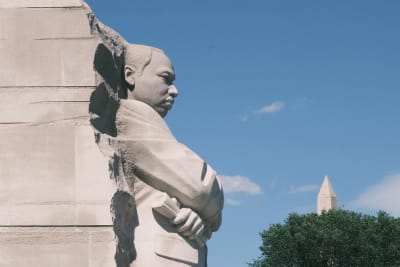
The narrative of progress often simplifies the journey, presenting it as a steady, upward climb. Yet, the reality is far more complex, built brick by brick through the relentless efforts of individuals who refused to accept the status quo. Benjamin Swan embodied this truth, a towering figure whose tireless advocacy for civil rights reverberated from the hallowed grounds of Selma, Alabama, to the streets of Springfield, Massachusetts, leaving an indelible mark on public policy and the conscience of a community. Swan’s passing at the age of 92 marks the end of an era, but his work continues to resonate. His commitment extended beyond mere rhetoric; it was a life lived in service to the principles of equality and justice. He was not just a participant in history; he was a shaper of it, standing shoulder to shoulder with giants like Dr. Martin Luther King Jr. during the pivotal 1963 March on Washington. This was a generation that understood sacrifice, a generation that knew the cost of freedom was measured in more than just words – it was measured in marches, in protests, and in the unwavering courage to confront injustice head-on. His impact was deeply felt in Springfield, where he served as a state representative for the 11th Hampden District for over two decades, from 1994 to 2016. However, to confine his influence solely to his legislative tenure would be a disservice. Swan’s activism predated his time in office, notably as the president of the Greater Springfield NAACP for a decade. It was during this period, in 1965, that he was arrested following an uprising at the Octagon Lounge, a stark reminder of the racial tensions and police brutality he actively fought against. This incident fueled his resolve, leading to further protests and demands for police reform in 1995, demonstrating a persistent dedication to systemic change. The ramifications of Swan’s advocacy were tangible. Former Springfield Mayor Michael J. Albano recalled how Swan’s influence contributed to a significant diversification of City Hall and the Police Department during his tenure. When Albano first took office, these institutions were predominantly white. By the time he left, the landscape had transformed, a testament to Swan’s persistent efforts to break down barriers and ensure representation. This wasn't just about optics; it was about fundamentally altering the power structures that had long excluded minority communities. Beyond the policy achievements, Swan was a beacon of inspiration, particularly for younger generations. State Representative Bud L. Williams, who now occupies Swan’s former legislative seat, shared a personal anecdote: he served as a driver for Swan in his youth. Williams described Swan as an exceptional mentor, who instilled in young activists the importance of non-violent protest, a philosophy he meticulously modeled after Dr. King. This mentorship fostered a new wave of leaders committed to the cause, ensuring the continuation of Swan’s legacy. The social media sphere buzzed with tributes, a digital echo of the profound respect and affection felt by many. Friends, colleagues, and constituents shared memories, highlighting Swan’s unwavering integrity, his powerful oratory, and his genuine commitment to the people he served. While some posts lauded his political accomplishments, many focused on his character – his empathy, his resilience, and his role as a guiding light. These online conversations underscored the widespread recognition of his contributions, transforming his passing into a moment of collective reflection and remembrance. Swan’s journey also highlights the ongoing struggle for civil rights. The issues he confronted – racial inequality, police misconduct, and systemic discrimination – remain pertinent today. His life serves as a powerful reminder that the fight for justice is not a relic of the past but a continuous endeavor. His approach, a blend of direct action and legislative engagement, offers a blueprint for contemporary activists navigating the complexities of modern social change. As we look ahead, the legacy of Benjamin Swan compels us to consider our own roles in advancing equality. His life’s work demands not just recognition but emulation. What steps can we take in our own communities to challenge injustice? How can we support leaders dedicated to dismantling systemic barriers? The enduring challenge lies in translating admiration into action, ensuring that the battles fought and the progress achieved by figures like Swan continue to inspire future generations towards a more equitable world. The watchword for what comes next is commitment – a renewed dedication to the principles he so fiercely championed.
In Brief
A look back at the life and legacy of civil rights icon Benjamin Swan, whose decades of advocacy in Springfield and beyond shaped public policy and inspired countless individuals.Advertisement




Comments
No comments yet. Be the first to comment!