
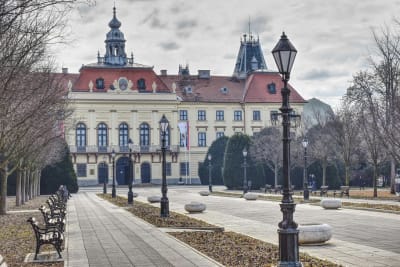
The narrative that Serbia is merely seeking economic benefits from its burgeoning relationship with China, while a significant part of the truth, dangerously oversimplifies the intricate geopolitical dance unfolding in the heart of the Balkans. President Aleksandar Vucic's recent state visit to Beijing, culminating in the signing of over twenty new cooperation agreements, signals a strategic deepening of ties that extends far beyond mere trade, embedding Serbia further into Beijing's global orbit at a moment of intense domestic scrutiny. These newly inked accords span a broad spectrum, from political and trade pacts to advancements in technology and educational exchanges, according to state broadcaster CCTV. This comprehensive approach underscores a deliberate effort to integrate Serbia into China's economic architecture, providing Vucic's government with substantial investment and infrastructure development opportunities. Beijing, in turn, secures a strategic foothold in Europe, a region where its influence is constantly being tested by Western powers. The timing of this renewed embrace is particularly noteworthy, occurring as Serbia grapples with a wave of persistent anti-government protests that have seen thousands take to the streets, leading to notable clashes over the weekend. During his meetings with Chinese President Xi Jinping, the Serbian leader was reportedly assured of China's support for Serbia's chosen development path and an eagerness to share governance experience. Xi’s stated desire to strengthen exchanges and cooperation aims to elevate their “comprehensive strategic partnership” to unprecedented levels, with specific mentions of expanding collaboration in cutting-edge sectors like artificial intelligence, the digital economy, and green energy. This focus on future-oriented industries suggests a long-term vision for the partnership, positioning Serbia as a potential testbed for Chinese technological advancements within the European continent. The domestic protests, fueled by allegations of electoral fraud and broader concerns about democratic backsliding and corruption, present a stark contrast to the outward displays of strong bilateral relations in Beijing. While Vucic's administration has consistently framed its foreign policy as balancing East and West, this overt pivot towards China, particularly during a period of internal dissent, raises questions about priorities. Critics argue that the government is seeking to leverage Chinese support to bolster its position domestically, using the perceived external validation to counter internal criticism. Social media platforms have become a crucial battleground for public opinion regarding these developments. Hashtags critical of the government's China policy and the protests are trending alongside state-aligned narratives promoting the benefits of the Sino-Serbian partnership. Images and videos of the Beijing summit, showcasing Vucic receiving China's Friendship Medal, are being amplified by pro-government outlets, while opposition supporters share footage of the domestic rallies and express concerns about Serbia's increasing economic and political dependence on Beijing, questioning the long-term implications for national sovereignty. Expert perspectives on this strategic alignment vary. Some analysts view it as a pragmatic move by a small nation seeking to maximize its economic leverage in a complex geopolitical landscape. Others express alarm, warning that the influx of Chinese investment, often tied to large infrastructure projects like the Belgrade-Batajnica highway and the Belgrade Waterfront, can lead to unsustainable debt, environmental concerns, and a gradual erosion of democratic standards, mirroring patterns observed in other countries deeply integrated into China's Belt and Road Initiative. The immediate future for Serbia likely involves a continuation of this dual-track approach: maintaining visible diplomatic and economic ties with Beijing while attempting to manage or suppress domestic opposition. The effectiveness of these protests in forcing policy concessions or influencing public discourse remains to be seen, but their sustained presence indicates a significant level of public dissatisfaction that cannot be ignored indefinitely. The government's reliance on Chinese backing may provide it with a buffer against Western pressure, but it also risks alienating potential partners who prioritize democratic governance. Looking ahead, the trajectory of Serbia's relationship with China will be a critical indicator of Beijing's growing influence in Southeastern Europe. The success or failure of joint ventures, the transparency of future agreements, and the impact on Serbia's democratic institutions will be closely watched by both regional neighbors and international observers. The ongoing tension between President Vucic's foreign policy objectives and the demands of his domestic electorate sets the stage for continued political maneuvering and potential shifts in the coming months and years.
In Brief
Serbian President Vucic's state visit to Beijing, marked by over 20 new cooperation agreements, deepens ties with China amidst rising domestic protests. This strategic embrace extends beyond economics, raising questions about Serbia's geopolitical alignment and internal governance.Advertisement




Comments
No comments yet. Be the first to comment!