

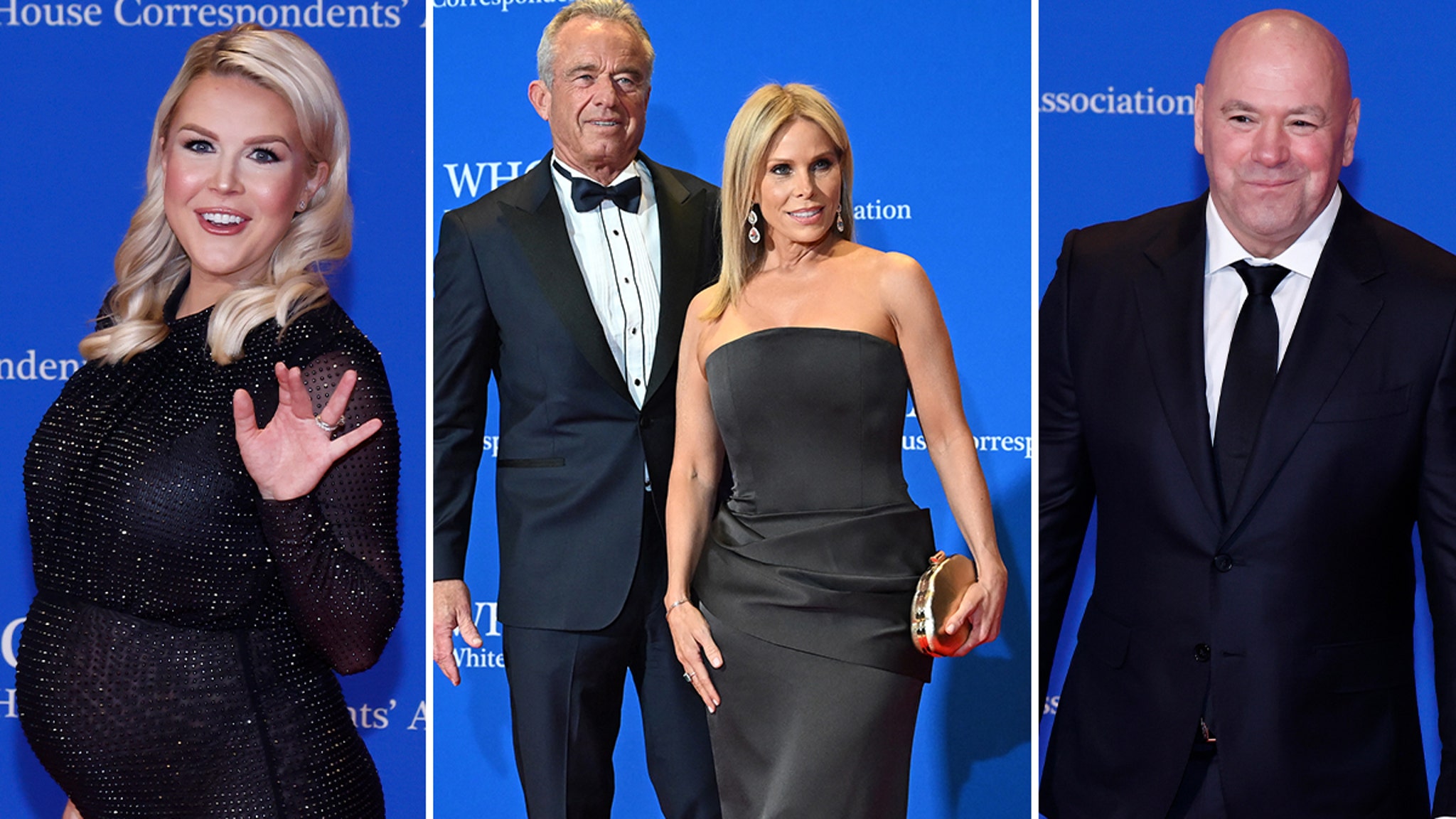
The hushed awe that typically surrounds the White House Correspondents' Association dinner shattered late Saturday, not with applause, but with the jarring reality of a security breach. A man, later identified as Cole Tomas Allen, 31, of Torrance, California, armed with both knives and firearms, attempted to penetrate the secure perimeter of a Washington hotel mere moments before President Donald Trump was slated to speak. This incident, occurring within the symbolic heart of American political discourse, sent immediate shockwaves through the assembled dignitaries, journalists, and government officials, transforming a night of tradition into a stark reminder of vulnerability. For President Trump, the event resonated with a deeply personal and alarming frequency. He described the attempted breach as a third instance of what he perceived as an assassination attempt during his less than two years in office. This framing, while intensely personal, connects the immediate threat to a broader narrative he has woven about his presidency being a lightning rod for extreme opposition. The presidency, he articulated, has become a "dangerous profession," suggesting that political violence, both domestic and international, is an increasingly inescapable facet of leadership in the current global climate. This perspective, amplified by such a visceral event, inevitably raises questions about the safety of public figures and the polarization that might drive such actions. This incident matters now because it occurs against a backdrop of heightened political animosity and increasingly volatile rhetoric in the United States. The attempted breach serves as a potent, albeit extreme, manifestation of the divisions that plague the nation. It forces a confrontation with the idea that the abstract political divides discussed in op-eds and debated on cable news can, in rare and terrifying instances, translate into physical threats. The proximity of the incident to a gathering intended to foster a unique relationship between the press and the executive branch adds another layer of significance, underscoring the fragility of democratic institutions and norms when faced with direct challenges. Those most directly affected are, of course, the President and his security detail, but the implications ripple outward. The journalists present, tasked with reporting on the nation's leadership, were confronted with their own potential danger. The broader public, already navigating a landscape of intense political polarization, is left to grapple with the unsettling realization that such threats are not confined to distant conflicts but can manifest even within seemingly secure, high-profile domestic events. The incident also implicitly affects the participants of future political gatherings and public appearances, raising concerns about security protocols and the atmosphere surrounding civic engagement. The societal implications extend beyond the immediate fear. The incident can be interpreted as a symptom of a democracy under strain, where the stakes of political disagreement are perceived by some to be existential. President Trump himself suggested that impactful leaders, drawing a parallel to Abraham Lincoln, are often targets. This viewpoint, while potentially self-serving, touches on a historical reality that those who enact significant change or challenge the status quo can become focal points for opposition. The incident underscores a growing concern about political radicalization and the potential for lone actors, motivated by a confluence of personal grievances and ideological fervor, to pose a threat. In the aftermath, President Trump adopted a tone of uncharacteristic conciliation, calling for unity and bipartisan healing. He highlighted the "tremendous amount of love and coming together" he observed among the diverse attendees at the dinner, suggesting that even amidst deep divisions, shared experiences can foster connection. This call for unity, delivered in the shadow of a security scare, presents a complex challenge: how to bridge the profound ideological chasms without diminishing the urgency of addressing the underlying causes of political extremism and violence. The observation that even "generally hostile" Democrats were waving to him, as he later recounted, illustrates the potential for moments of crisis to briefly, if temporarily, alter the tenor of political interactions. As for potential solutions, the immediate focus will undoubtedly be on enhancing security measures for high-profile events and public figures. However, a more profound response requires addressing the root causes of political polarization and animosity. This includes fostering more civil discourse, combating misinformation that fuels division, and strengthening civic education to promote understanding and respect for democratic processes. Experts in political science and public safety will likely scrutinize the effectiveness of current threat assessment protocols and the mechanisms for identifying and intervening with individuals exhibiting concerning behaviors. The takeaway for the public is a stark reminder that the health of a democracy is not solely dependent on its institutions but also on the conduct of its citizens and leaders. The incident compels a reassessment of the rhetoric used in political discourse and a renewed commitment to the principles of peaceful disagreement and mutual respect. It underscores the shared responsibility to ensure that political engagement remains a constructive force, rather than a catalyst for violence and fear, urging citizens to consider the impact of their own words and actions in the broader societal conversation. Looking ahead, the critical question is whether this incident will catalyze a genuine shift towards de-escalation and unity, or if it will become another flashpoint in an already deeply fractured political landscape. The effectiveness of President Trump's call for reconciliation, the actions taken by lawmakers to address political extremism, and the public's response to the ongoing narrative of division will all be crucial indicators. The coming weeks and months will reveal whether this moment of palpable danger translates into lasting change or fades into the background noise of an increasingly turbulent political era.
In Brief
A security breach at the White House Correspondents' Dinner, where a man armed with weapons attempted to bypass security, has ignited discussions on political polarization and presidential safety. President Trump's reaction and call for unity are examined in light of escalating tensions.Advertisement



Comments
No comments yet. Be the first to comment!