

Policy Snapshot
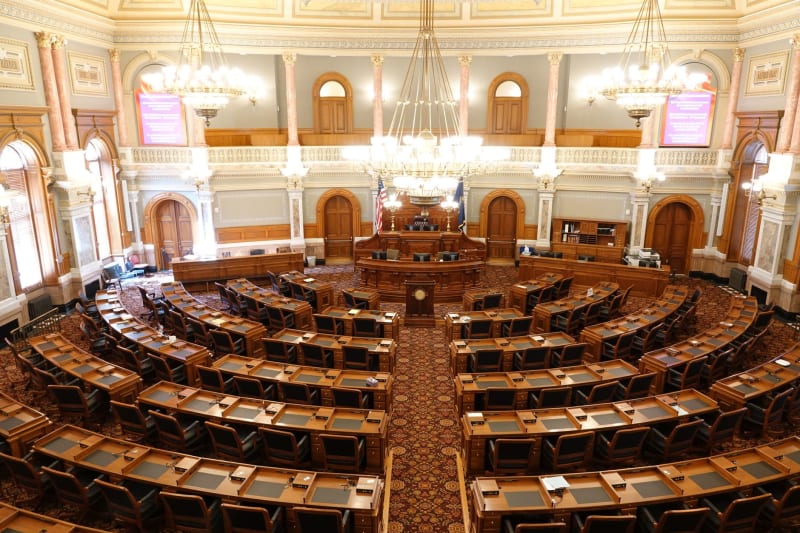
- Federal Reserve Chair Kevin Warsh steadfastly refused to provide explicit details regarding his recent private communications with Donald Trump, raising immediate concerns among lawmakers about the erosion of the central bank's traditional independence.
- The Senate Banking Committee hearing highlighted deep bipartisan anxiety over persistent inflationary pressures, with members pushing for concrete timelines on future interest rate adjustments that Warsh ultimately declined to provide.
- Emerging technologies, specifically the rapid integration of generative artificial intelligence into financial markets, were flagged as systemic risks, yet the Fed leadership offered few regulatory specifics to address these disruptions.
- Lawmakers from both parties expressed frustration over the perceived lack of transparency, arguing that the public deserves clear, unambiguous communication regarding the central bank's long-term strategy for economic stabilization.
- The tension between fiscal policy and monetary policy was a central theme, as senators questioned how the Federal Reserve plans to navigate potential tariff implementations and massive federal deficit spending over the coming fiscal year.
- Market analysts warn that the Federal Reserve's ambiguous stance could fuel further volatility in global bond markets, as investors struggle to price in risks without explicit guidance from monetary authorities.
The Policy History
The Federal Reserve's institutional independence has long been considered the bedrock of American economic stability, shielding monetary policy from short-term political pressures. Historically, central bank chairs have maintained a strict, arm's-length relationship with the executive branch to prevent the politicization of interest rates. However, recent administrations have increasingly challenged this norm, publicly pressuring Fed leadership to align monetary policy with political agendas. This ongoing tension reached a critical flashpoint during Kevin Warsh's recent testimony before the Senate Banking Committee, where his evasive answers regarding private discussions with Donald Trump reignited a fierce national debate over the boundaries of executive influence.
Over the past decade, the Federal Reserve has navigated an extraordinarily complex economic landscape, characterized by unprecedented quantitative easing, supply chain shocks, and a aggressive rate-hiking cycle designed to curb runaway inflation. Throughout these crises, the central bank's communication strategy has evolved toward 'forward guidance,' a policy designed to provide markets with clear expectations of future policy moves. Yet, critics argue that this transparency has degraded into strategic ambiguity, leaving market participants and lawmakers in the dark during critical economic transitions. The historical precedent of clear, predictable monetary policy is now being tested as global economic dynamics become more volatile and unpredictable.
This hearing comes at a time when the Federal Reserve is facing intense scrutiny over its past policy missteps, particularly its delayed response to the post-pandemic inflation surge. Lawmakers are highly sensitive to any signs that the central bank might be capitulating to political pressures rather than relying strictly on data-driven economic indicators. The historical consensus that an independent central bank is essential for maintaining long-term price stability is under threat, making Warsh's defensive performance before the Senate a highly concerning development for economists who fear the long-term consequences of political interference in monetary policy.
Who Is Affected
The implications of Kevin Warsh's testimony and the Federal Reserve's future policy direction extend far beyond the halls of Congress, directly impacting everyday American consumers. With interest rates remaining elevated, ordinary citizens are facing historically high borrowing costs for mortgages, auto loans, and credit cards. The lack of clear guidance from the Fed makes it exceedingly difficult for households to plan major financial decisions, such as purchasing a home or refinancing existing debt. As long as monetary policy remains uncertain, consumers will continue to bear the burden of high borrowing costs without any clear indication of when relief might arrive.
For small business owners and corporate executives, the central bank's strategic ambiguity introduces a highly disruptive layer of uncertainty into capital expenditure planning. Businesses rely on predictable interest rate environments to secure financing for expansion, hire new employees, and invest in research and development. When the Federal Reserve refuses to clarify its path forward, companies are forced to adopt a defensive posture, delaying critical investments and potentially slowing down broader economic growth. This cautious approach can have a cascading effect across supply chains, ultimately impacting employment rates and wage growth.
Global financial markets and institutional investors are also deeply affected by the Fed's communication gaps, as uncertainty breeds market volatility. Bond yields, equity valuations, and currency exchange rates react sharply to any perceived shift in the central bank's stance. Without explicit guidance on inflation targets and interest rate trajectories, algorithmic trading and speculative behavior can amplify market swings, creating an unstable environment for retirement accounts and pension funds. The lack of transparency from the world's most influential central bank reverberates across global markets, affecting international trade and investment flows.
The Case For
Proponents of Kevin Warsh's cautious and deliberate approach argue that maintaining strategic ambiguity is a necessary tool for the Federal Reserve in an era of extreme economic unpredictability. By refusing to commit to rigid timelines or explicit policy paths, the central bank retains the flexibility required to respond dynamically to rapidly changing economic data. Supporters contend that locking the Fed into a specific course of action could prove disastrous if unexpected geopolitical shocks or sudden shifts in domestic fiscal policy occur, requiring immediate and decisive monetary adjustments that deviate from previous promises.
Furthermore, defenders of the Chair emphasize that private dialogues between the Federal Reserve and executive branch leadership are not inherently corrupt, but rather a practical necessity for coordinated macroeconomic management. They argue that a functioning government requires open channels of communication between fiscal authorities and monetary policymakers to prevent conflicting policies that could destabilize the economy. From this perspective, Warsh's refusal to disclose the details of these private conversations is a responsible measure to protect the confidentiality of sensitive discussions that could otherwise trigger unnecessary panic in the financial markets.
Supporters also point out that the Federal Reserve's primary mandate is to achieve maximum employment and price stability, not to satisfy the political curiosity of congressional committees. They argue that Warsh's focus on long-term structural economic health, rather than short-term political theater, demonstrates strong and independent leadership. By shielding the central bank's decision-making process from immediate public and political pressures, the Fed can make the difficult, often unpopular choices necessary to curb inflation and ensure sustainable, long-term economic growth for the nation.
The Case Against
Critics strongly condemn Kevin Warsh's evasive testimony, arguing that his refusal to answer direct questions from elected representatives represents a severe blow to democratic accountability and institutional transparency. The Federal Reserve operates under a mandate granted by Congress, and lawmakers argue that they have a constitutional duty to oversee the central bank's activities. By withholding information regarding private discussions with political figures and failing to clarify crucial policy directions, the Fed leadership is seen as operating in an undemocratic vacuum, shielded from the very public they are sworn to serve.
Furthermore, opponents argue that the central bank's persistent ambiguity regarding inflation and interest rates is actively harming the economy by fueling market instability and eroding public trust. When the Fed fails to provide clear, actionable guidance, it creates a speculative environment where market participants are forced to guess the next policy move, leading to erratic market behavior. Critics contend that this lack of clarity is not a sophisticated strategy, but rather a sign of indecisiveness and a lack of a cohesive plan to address the complex economic challenges facing the nation, including persistent inflation and technological disruptions.
The refusal to disclose the nature of communications with Donald Trump is particularly alarming to critics, who view it as a tacit admission that the central bank's independence is being compromised. They argue that any perception of political influence undermines the credibility of the Fed's monetary decisions, leading the public to believe that interest rate adjustments are being made for political expediency rather than objective economic reasons. This loss of credibility could have devastating long-term consequences, making it far more difficult for the Fed to anchor inflation expectations and manage future economic crises effectively.

Policy Questions Answered
Implementation Watch
As the Federal Reserve navigates this period of intense political and economic scrutiny, the implementation of its monetary policy will be watched with unprecedented intensity by global markets. The immediate challenge lies in how the central bank will manage its balance sheet and interest rate trajectory in the face of conflicting economic signals. With inflation showing stubborn persistence in key sectors and the labor market demonstrating unexpected resilience, the Fed's data-dependent approach will be put to the ultimate test. Any deviation from expected policy paths will be dissected for signs of political capitulation or internal division.
Furthermore, the integration of advanced technologies like artificial intelligence into the financial system will require the Federal Reserve to rapidly upgrade its regulatory and supervisory frameworks. The Fed must develop sophisticated monitoring tools to detect and mitigate algorithmic risks that could trigger flash crashes or systemic liquidity crises. This technological transition must be managed carefully to avoid stifling innovation while ensuring that the stability of the banking sector is not compromised by unregulated, automated trading systems that operate beyond traditional regulatory boundaries.
Ultimately, the success of the Federal Reserve's strategy will depend on its ability to restore public trust and maintain its institutional credibility. This will require a delicate balancing act: providing enough transparency to satisfy congressional overseers and market participants without compromising the confidential deliberations necessary for effective policymaking. As the fiscal landscape shifts with new legislative agendas, the Fed's commitment to its dual mandate of price stability and maximum employment will remain the critical anchor for the American economy during these turbulent times.















Comments
No comments yet. Be the first to comment!