
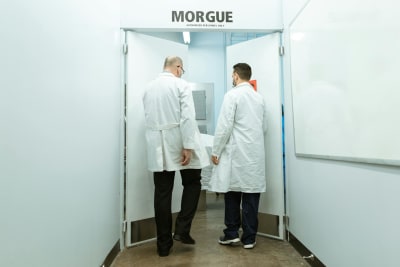
The White House physician's pronouncement of President Trump's 'excellent health' and 'full fitness' for office, released Friday following a Tuesday examination at Walter Reed National Military Medical Center, offered a stark contrast to the subtle but significant details emerging from the comprehensive medical report. While the official summary painted a picture of robust well-being, a deeper dive into the documentation revealed a 14-pound weight gain over the past year, a noticeable increase in his body mass index approaching the threshold of obesity, and unusual bruising on his hands attributed to 'frequent handshaking.' These findings, though downplayed by medical staff, have inevitably fueled public and political discourse, diverging from the expected straightforward confirmation of the president's physical capacity. The examination itself was extensive, involving 22 specialists who conducted a battery of tests including CT scans, advanced cardiac imaging, and thorough cancer screenings. President Trump, at 79 years old, reportedly described the results as 'PERFECTLY' fine after the three-hour assessment. However, the report from Dr. Sean Barbabella, the presidential physician, detailed a weight of 238 pounds for his 6-foot, 3-inch frame, pushing his BMI to 29.7. This figure hovers just shy of the 30 BMI mark, which medical professionals define as obese, raising questions about the long-term health implications and lifestyle recommendations provided. Adding another layer of intrigue were the documented bruises on the president's hands. The report explained these as 'minor soft tissue irritation related to frequent handshaking' and a 'common and benign effect of aspirin therapy.' This explanation, while medically plausible, drew immediate attention given the president's public persona and the symbolic weight of his interactions. The recommendation to switch to low-dose aspirin suggests a proactive measure against potential cardiovascular concerns, though the report maintained overall cardiac and pulmonary health were strong. The context of chronic venous insufficiency, a condition previously diagnosed in the president that causes blood pooling in the legs, was also revisited. While the report noted 'slight lower leg swelling,' it also indicated an 'improvement from last year,' suggesting the condition is being managed. This finding, alongside the improved cholesterol levels – down to 143 from a high of 223 in 2018 – points to the president's engagement with medical advice and treatment regimens. Crucially, the report confirmed the president's continued cognitive sharpness, with a perfect score of 30 out of 30 on the Montreal Cognitive Assessment. This widely used screening tool for dementia and cognitive impairment has yielded consistent perfect scores for the president in previous years, reinforcing the medical assessment of his mental acuity and ability to handle the demanding cognitive load of the presidency. Social media platforms immediately lit up with reactions to the health report. Hashtags related to 'Trump's weight' and 'handshake bruising' trended as users debated the significance of the findings. Pundits and commentators seized on the weight gain and bruising, framing it as potential vulnerabilities or, conversely, as evidence of a president actively managing his health amidst a grueling schedule. The differing interpretations highlighted the polarized nature of public perception regarding the president's physical and mental state. This detailed health update connects to a broader national conversation about the fitness of aging leaders for high-pressure roles. As more national figures reach advanced ages while remaining in public life, the public's demand for transparency regarding their health has intensified. The scrutiny applied to President Trump's medical report is indicative of a growing trend where voters and citizens seek concrete evidence of a candidate's or incumbent's ability to withstand the rigors of office, moving beyond mere assurances. The president's demanding daily schedule, characterized by 'multiple high-level meetings, public engagements, and regular physical activity,' was cited by Dr. Barbabella as a factor supporting his 'overall well-being.' This assertion attempts to contextualize the president's health metrics within the framework of his active lifestyle, suggesting that his rigorous routine, rather than solely detracting from his health, contributes to maintaining it. The physician's commentary underscores the belief that consistent engagement and activity are vital components of the president's continued health. Looking ahead, the focus will undoubtedly remain on how these health metrics evolve and whether the lifestyle adjustments recommended by his medical team will be publicly visible. The long-term impact of the weight gain and the management of his chronic venous insufficiency will be closely monitored, not just by medical professionals, but by the public and political observers alike. Future medical reports will be analyzed for any significant changes, providing further insight into the president's sustained capacity to lead.
In Brief
A deep dive into President Trump's latest medical report reveals a 14-pound weight gain and unusual hand bruising, sparking renewed debate about his fitness for office.Advertisement

Comments
No comments yet. Be the first to comment!