
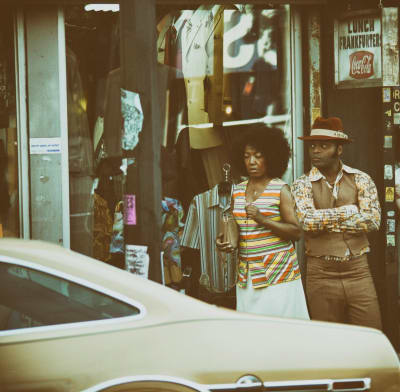
Could a music festival become a flashpoint in the nation's increasingly polarized cultural landscape? The initial announcement of performers for the 'Great American State Fair,' slated to take place on Washington D.C.'s National Mall, promised a nostalgic journey through American music. However, what was intended as a celebration has rapidly devolved into a public relations challenge for its organizers, primarily due to its deep ties to the Trump administration and the ensuing backlash from artists themselves. The festival, billed as a showcase of American heritage and talent, quickly found its curated lineup under intense scrutiny. The controversy erupted following the unveiling of the first wave of artists, which included several prominent figures from funk and soul music. Almost immediately, two of the most recognizable names, The Commodores and Morris Day, issued public statements indicating their withdrawal from scheduled performances. Their stated reasons were varied but pointed towards a desire to distance themselves from the political associations of the event. This wasn't merely a logistical hiccup; it represented a significant blow to the festival's credibility and its ability to attract further talent, signaling a deep unease among established artists about performing at events with overt political affiliations, particularly those linked to the current administration. This wave of cancellations highlights a growing trend where artists are increasingly conscious of their brand and the messages their performances convey. In an era of hyper-connectivity and instant public feedback, a musician's choice of venue or festival can carry substantial weight. Social media platforms became immediate battlegrounds, with fans debating the artists' decisions. Supporters of the festival accused the musicians of political grandstanding, while critics lauded them for taking a principled stand. The online discourse amplified the narrative, turning a professional scheduling conflict into a cultural referendum on artistic integrity and political neutrality. Digging deeper into the festival's organizational structure reveals a complex web of associations. Freedom 250, the entity behind the 'Great American State Fair,' has been described in reports as having connections to individuals within the President's orbit. While the exact nature of these links remains somewhat opaque, the perception is that the festival is not a purely apolitical cultural endeavor. This perceived alignment has proven to be a significant deterrent for artists who either hold opposing political views or simply wish to avoid being drawn into partisan debates, regardless of their personal political leanings. The ambiguity surrounding Freedom 250’s funding and leadership only serves to fuel this speculation. Experts in the music industry and cultural commentary suggest that this situation is emblematic of a broader shift in artist activism. "Artists today are more aware than ever of their platform and the potential impact of their choices," notes Dr. Eleanor Vance, a cultural sociologist specializing in media and performance. "They are navigating a landscape where performing at a politically charged event, even indirectly, can alienate significant portions of their fanbase or compromise their artistic independence. The days of artists remaining strictly neutral in highly polarized times are becoming increasingly rare, especially when significant political figures are involved." The economic ripple effects, though perhaps less immediate, are also noteworthy. A festival of this scale, intended to draw large crowds to the National Mall, represents a significant investment and a potential boost to local businesses. However, with key performers pulling out and negative publicity mounting, attendance projections are likely to be revised downwards. This could lead to financial losses for the organizers and reduced economic activity in the surrounding areas. Furthermore, the brand damage to Freedom 250 and potentially to the National Mall as a venue for large-scale, non-political events could have long-term consequences. The social impact is perhaps the most profound. The 'Great American State Fair' was envisioned, at least publicly, as a unifying event celebrating American culture. Instead, it has become a symbol of division. The withdrawal of beloved artists underscores the deep cultural rifts that exist within the United States. It prompts questions about whose culture is being celebrated and who gets to define it. The event’s organizers are now faced with the difficult task of salvaging their festival, potentially by seeking new performers or attempting to reframe the event’s narrative, a challenging endeavor given the initial controversy. Looking ahead, the primary question will be whether Freedom 250 can attract enough credible talent to proceed with a meaningful event. Their ability to either secure artists who are less sensitive to political affiliations or to successfully rebrand the festival as something distinct from its perceived Trump-era origins will be critical. The public will also be watching to see if other artists follow suit in withdrawing, further jeopardizing the festival, or if new performers emerge, signaling a potential shift in the discourse. The fate of the 'Great American State Fair' may offer insights into the evolving relationship between entertainment, politics, and public perception in a highly charged era.
In Brief
Music legends like The Commodores and Morris Day are withdrawing from a Trump-affiliated festival on the National Mall, sparking debate and highlighting artist activism.Advertisement
Comments
No comments yet. Be the first to comment!