

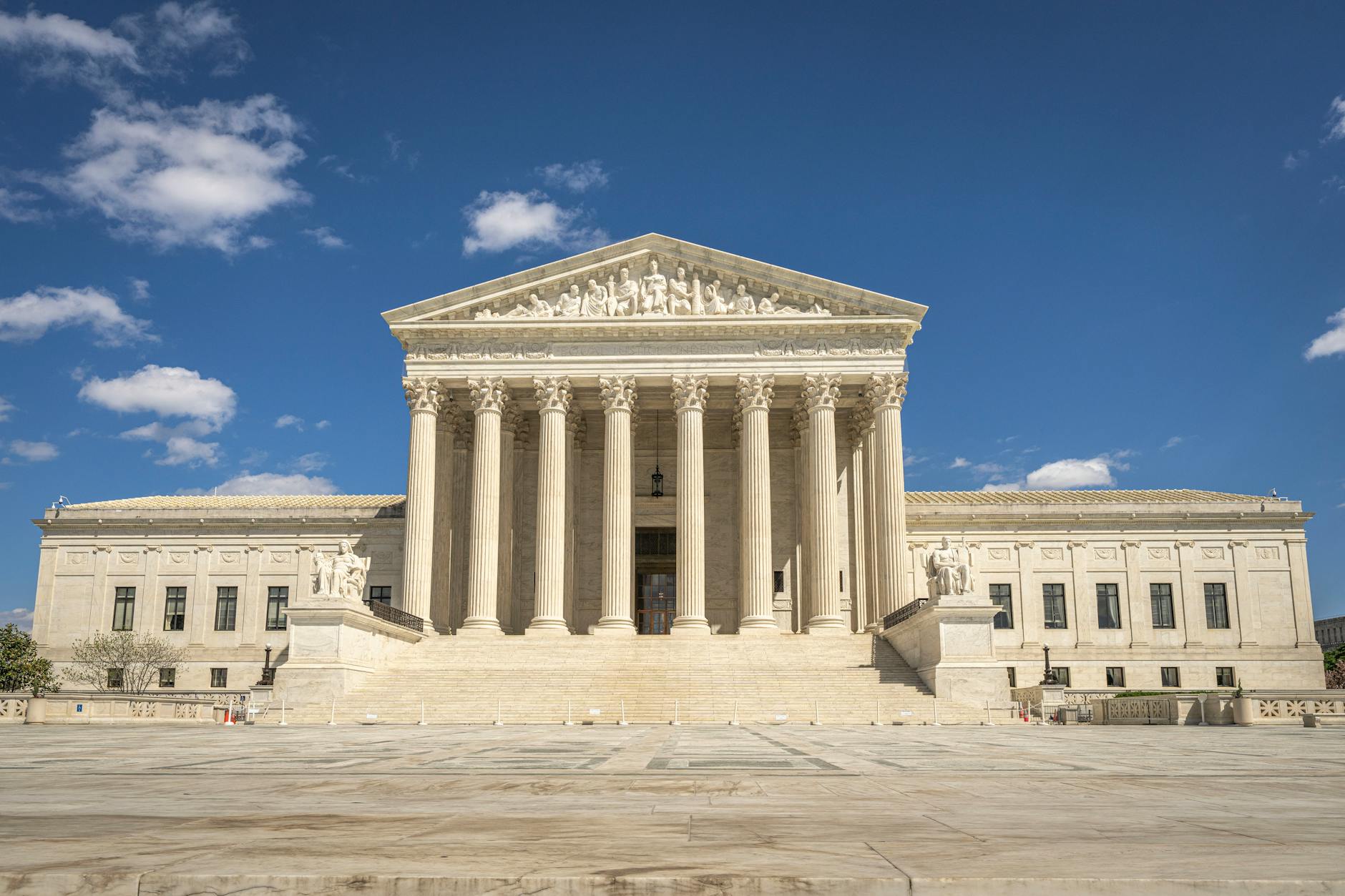
What began as a potentially even playing field in the fight for congressional control has dramatically shifted, leaving Republicans with a tangible advantage as the midterm elections loom. Just weeks ago, Democrats celebrated a narrow victory in Virginia, a move that signaled a potential draw in the high-stakes game of redistricting. However, a swift series of legal and legislative developments has upended those expectations, handing Republicans a significant edge in shaping the electoral map and protecting their slim majority in the House of Representatives. The turning tide began with a landmark decision from the U.S. Supreme Court. In a ruling that reverberated across the nation, the court declared that race can almost never be a primary factor in drawing congressional district lines. This pronouncement, which overturned Louisiana's congressional map, immediately cast a shadow over numerous majority-minority districts across the country, many of which are represented by Democrats. The legal precedent set by this decision emboldened Republican-controlled legislatures to scrutinize and redraw maps, potentially diluting the voting power of minority communities and consequently, the Democratic Party's support base. Following closely on the heels of the Supreme Court's decree, Florida's Republican-led legislature delivered a decisive blow. They finalized a new congressional map meticulously designed to benefit the GOP, with projections suggesting the party could gain as many as four House seats. This strategic maneuver effectively erased any potential net gain Democrats had hoped to achieve through their Virginia efforts, demonstrating the potent impact of partisan control over the redistricting process. The Sunshine State's actions underscored a broader trend: where Republicans held legislative power, they were prepared to wield it to their electoral advantage. The repercussions continued to unfold in Louisiana. Republican officials moved swiftly to delay the state's primary elections, creating an opening for a new map to be drawn and implemented before voters cast their ballots. The U.S. Supreme Court's subsequent decision to allow its ruling on Louisiana's map to take immediate effect meant that state lawmakers could craft districts targeting at least one of the state's two Democratic-held seats. This accelerated timeline demonstrated a clear intent to reshape the political landscape before the upcoming elections, prioritizing partisan gain over the established electoral order. Tennessee presented another stark example of the GOP's ascendant position. The state's Republican-controlled legislature passed a redrawn map that effectively dismantled the boundaries of its sole majority-Black congressional district, represented by Democratic Representative Steve Cohen. This move, widely seen as a direct assault on minority representation, positioned Republicans to potentially seize another House seat. The calculated carving up of districts, particularly those with a significant minority population, highlighted a sophisticated strategy to maximize Republican electoral fortunes through demographic engineering. South Carolina, too, saw Republican state lawmakers maneuvering to enhance their party's standing. While the specifics of their actions were still unfolding, the broader context suggested a similar inclination to leverage redistricting for partisan advantage. The pattern emerging from these states painted a clear picture: a coordinated effort by Republican strategists and lawmakers to capitalize on favorable legal interpretations and legislative control to solidify their grip on power. These developments carry profound implications for the average voter. Redistricting, often perceived as an arcane political process, directly influences who represents communities and how effectively those representatives can advocate for their constituents' needs. When districts are drawn to favor one party, it can lead to fewer competitive elections, reduced accountability for elected officials, and a greater entrenchment of partisan polarization. For voters in states where maps are heavily gerrymandered, their choices at the ballot box may feel predetermined, diminishing the impact of their individual vote. The ramifications extend beyond individual districts, impacting the national balance of power. With Republicans poised to potentially pick up several seats through redistricting alone, their path to regaining or maintaining a House majority becomes significantly smoother. This shift could have a cascading effect on legislative priorities, committee assignments, and the overall direction of policy for the next decade, making the outcomes of these redistricting battles some of the most consequential political events leading into the midterms. Looking ahead, the focus will undoubtedly shift to the remaining redistricting battles and potential legal challenges. States where district maps are still contested or subject to ongoing litigation will be closely watched. Furthermore, the long-term impact of the Supreme Court's race-conscious redistricting ruling will continue to unfold, potentially leading to further legal challenges and a reevaluation of district boundaries across the country. The effectiveness of Democratic counter-strategies and grassroots organizing in mitigating these partisan gains will also be a crucial factor to monitor as the election cycle progresses.
In Brief
Welcome to From the Politics Desk , a daily newsletter that brings you the NBC News Politics team’s latest reporting and analysis from the White House, Capitol Hill and the campaign trail. \n Subscribe to read this story ad-free \n GetAdvertisement




Comments
No comments yet. Be the first to comment!