
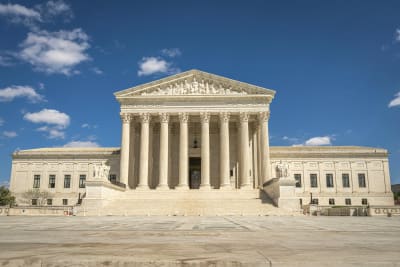
For nearly two decades, Chief Justice John Roberts has consistently articulated a powerful vision for the United States: a nation where race is no longer a significant factor in political or social life. This aspiration, often summarized as a "color-blind" society, suggested a future where legal frameworks and public discourse would transcend racial considerations, treating all individuals equally regardless of their background. However, recent societal shifts and landmark legal decisions are revealing the profound complexities and unforeseen obstacles in achieving this seemingly straightforward ideal. The path Roberts envisioned, paved with the intent of dismantling racial prejudice through legal neutrality, is proving far more arduous and contested than perhaps even its most ardent proponents anticipated. Roberts's commitment to this principle is not a recent development; it has been a guiding star throughout his tenure on the Supreme Court. As early as 2007, in his majority opinion for *Parents Involved in Community Schools v. Seattle School District No. 1*, he famously stated that "the way to stop discriminating on the basis of race is to stop discriminating on the basis of race." This sentiment underscored a belief that actively considering race, even with the aim of rectifying past injustices, ultimately perpetuates the very divisions it seeks to heal. This philosophical underpinning has informed numerous rulings, often challenging affirmative action programs and other race-conscious policies designed to promote diversity and equity. This consistent judicial philosophy, however, now confronts a United States grappling with renewed and intensified conversations about systemic racism. The widespread protests and activism that followed the murder of George Floyd in 2020, for instance, brought to the forefront the lived experiences of marginalized communities and amplified demands for more robust, race-conscious remedies. Data from organizations like the Pew Research Center consistently show significant disparities in wealth, education, and justice system outcomes along racial lines, providing empirical weight to arguments that a purely color-blind approach may fail to address deeply embedded inequalities. The Supreme Court itself, under Roberts's leadership, has recently delivered opinions that appear to diverge from or complicate the very color-blind ideal he championed. The 2023 decision striking down affirmative action in college admissions, while framed by the majority as a victory for equal treatment, was met with fierce criticism from those who argue it ignores centuries of systemic disadvantage and will exacerbate racial inequities in higher education. This ruling, alongside others that have narrowed voting rights protections and limited the scope of anti-discrimination laws, suggests a court moving towards a stricter interpretation of equality that prioritizes formal neutrality over substantive outcomes. These legal pronouncements are not happening in a vacuum; they are resonating deeply with a public increasingly polarized on issues of race. For many, particularly those from historically disadvantaged groups, the court's recent actions feel like a rollback of progress and a dismissal of their ongoing struggles. They point to the persistent economic gaps – for example, the median net worth of Black households remains a fraction of that of white households, a disparity that has persisted for decades – as clear evidence that race still matters profoundly in shaping life chances. The frustration is palpable, fueling a sense that the legal system is not a neutral arbiter but an active participant in maintaining existing power structures. Conversely, proponents of the court's direction, including Chief Justice Roberts, maintain that this is precisely the necessary evolution toward a truly equitable society. They argue that focusing on individual merit and universal rights, rather than group identity, is the only sustainable path to national unity. This perspective often emphasizes that past discrimination should not dictate present-day policies and that any race-conscious approach risks creating new forms of reverse discrimination. The debate, therefore, is not merely about legal interpretation but about fundamentally different understandings of justice, equality, and the role of race in a diverse democracy. The ripple effects of this judicial direction are already being felt across various sectors. Educational institutions are recalibrating admissions and diversity initiatives, businesses are reviewing their diversity, equity, and inclusion (DEI) programs under legal scrutiny, and political discourse is becoming increasingly charged. The debate over whether government and institutions should be race-conscious or race-neutral is central to ongoing political battles, influencing elections and policy debates from local school boards to the halls of Congress. This clash of visions is a defining characteristic of contemporary American society. As the nation navigates these complex issues, the Supreme Court's future rulings will undoubtedly continue to shape the legal landscape surrounding race and equality. The tension between the ideal of color blindness and the reality of persistent racial disparities remains a critical fault line in American life. Observers will be watching closely to see how lower courts interpret these high court decisions, how institutions adapt, and whether the persistent gaps in opportunity begin to narrow or widen in the years ahead. The ultimate success, or failure, of Chief Justice Roberts's long-held vision will unfold in these ongoing societal and legal struggles.
In Brief
Chief Justice John Roberts's decades-long pursuit of a color-blind America is encountering significant challenges. Recent Supreme Court rulings and evolving societal demands highlight the deep complexities of achieving racial equality in practice.Advertisement




Comments
No comments yet. Be the first to comment!