
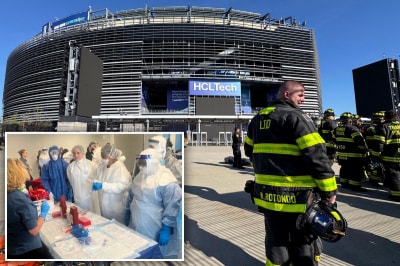
The roar of the crowd at MetLife Stadium will soon be joined by a more subtle, yet potentially far more urgent, sound: the hum of medical alert systems. As millions of global soccer fans converge on the New York and New Jersey area for the upcoming FIFA World Cup, local hospitals are bracing not just for the usual surge in emergency room visits, but for the unprecedented challenge of safeguarding public health against a spectrum of infectious diseases. This massive influx of international travelers, numbering an estimated 1.2 million for the New York/New Jersey region alone, presents a unique public health scenario, drawing experts' attention to threats ranging from common viral infections to rare, high-consequence pathogens. For nearly two years, a quiet but intensive preparation has been underway within the healthcare infrastructure of both states. Infectious disease specialists, epidemiologists, and emergency response teams have been engaged in a comprehensive strategy to bolster defenses. Their focus extends beyond the immediate needs of the massive crowds expected at the 48 matches hosted across the US, which collectively anticipate 6 to 7 million visitors. The primary concern is the potential introduction and rapid spread of a diverse array of pathogens that may be endemic in various parts of the world but less common or controlled in the United States. This proactive stance reflects lessons learned from past global health crises. This meticulous planning involves anticipating a broad range of health threats. Medical professionals are on high alert for everything from the resurgence of vaccine-preventable diseases like measles and varicella to more serious conditions such as tuberculosis, hepatitis A, and malaria. The specter of viral hemorrhagic fevers, including potential scenarios involving diseases like Ebola, also looms large, necessitating specialized containment protocols and treatment readiness. Beyond infectious agents, planners are also factoring in the possibility of mass-casualty events, a grim reality that underscores the need for robust emergency medical services capable of handling large-scale trauma. To test these preparedness levels, a significant multi-day training exercise was conducted involving over 500 healthcare providers from the New York and New Jersey systems. This large-scale drill simulated the emergency air transport of simulated patients afflicted with infectious diseases. The scenario involved transporting these "patients" from Toronto, another World Cup host city, to LaGuardia Airport in Queens, New York. From there, they were moved to Bellevue Hospital, a prominent public hospital in Manhattan known for its experience in handling critical cases, including treating New York City's only confirmed Ebola patient in 2014. This exercise specifically evaluated the teams' proficiency in utilizing portable bio-containment units, essential for safely isolating and transporting individuals with highly contagious illnesses. "The whole health care system in New York City will be on the alert for ALL of these events," stated Dr. Vikramjit Mukherjee, chief of critical care at Bellevue Hospital. He likened the situation to managing a "huge migration event," emphasizing the scale and complexity of the challenge. This perspective highlights the interconnectedness of global events and local health security. The experience gained from managing past outbreaks like Ebola, COVID-19, and mpox has instilled a sense of heightened responsibility among institutions like Bellevue, which now feel they are on the front lines for any emerging global health threat. Such preparedness is not merely a precaution; it is a strategic imperative. Social media platforms are already buzzing with discussions, ranging from excitement about the matches to anxieties about potential health risks. Online forums and social networks are a double-edged sword: they can disseminate crucial public health information and safety guidelines, but they also risk amplifying misinformation and fueling public panic. Health authorities are monitoring these channels closely, prepared to counter false narratives and provide accurate, timely updates. The viral nature of social media means that a localized health scare could rapidly escalate into a global concern, underscoring the need for integrated communication strategies. In this scenario, several stakeholders stand to gain significantly. The healthcare sector, particularly those institutions involved in advanced infectious disease management and emergency response, will benefit from heightened preparedness and potentially increased funding for specialized equipment and training. Diagnostic and pharmaceutical companies could see demand for their products surge if outbreaks occur. Conversely, the tourism and hospitality industries, while poised for a major economic boost from the influx of visitors, also stand to lose immensely if any health crisis deters attendees or tarnishes the region's reputation. Local businesses heavily reliant on the tournament's success face considerable risk. Beyond the immediate medical response, the long-term implications for public health infrastructure are profound. The investments in training, equipment, and inter-agency coordination spurred by this event could fortify regional resilience against future pandemics or health emergencies. The success of this large-scale preparedness effort hinges on seamless collaboration between local, state, federal, and international partners. Hackensack Meridian Health, for instance, as the closest Level 1 trauma center to MetLife Stadium, plays a critical role in the New Jersey side of the response, highlighting the distributed nature of the operational plan. Their proximity to the stadium, which will host eight games including the final, places them directly in the path of potential impacts. Moving forward, attention will be fixed on how effectively these elaborate preparations translate into real-world response should an incident occur. The coming weeks and months will be a critical test of this multi-year effort, demonstrating whether the simulated scenarios can be effectively managed in the face of genuine public health challenges. The world will be watching, not just for the thrilling soccer action, but for the quiet, crucial work of safeguarding health amidst the global spectacle.
In Brief
As millions of soccer fans descend on NYC-NJ for the FIFA World Cup, local hospitals are enacting extensive health preparedness plans to counter the risk of infectious diseases and mass-casualty events.Advertisement




Comments
No comments yet. Be the first to comment!