

Key Takeaways
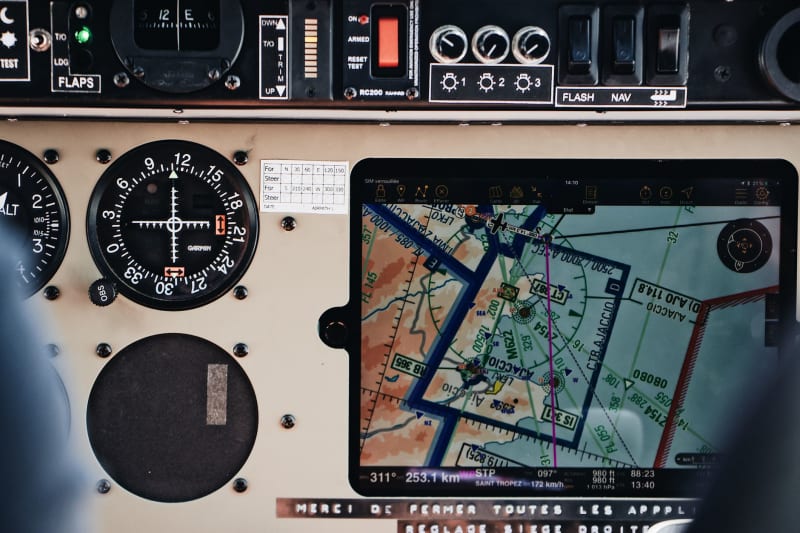
- Garmin's new AXIS flight display system represents a significant leap forward in aviation technology, offering unparalleled integration and streamlining of critical flight information for pilots.
- The AXIS system is designed to enhance situational awareness dramatically, providing pilots with a more cohesive and intuitive understanding of their aircraft's status and surrounding environment during all phases of flight.
- By consolidating multiple instruments into a unified, user-friendly interface, AXIS aims to reduce pilot workload and minimize the potential for errors, thereby contributing to safer flight operations across the board.
- AXIS features advanced connectivity options, enabling seamless data transfer and integration with other Garmin avionics and external systems, which is crucial for modern networked cockpits.
- The modular and scalable architecture of AXIS ensures that it can be adapted for a wide range of aircraft, from general aviation to more complex platforms, offering future-proof solutions for diverse operational needs.
- This innovative system is expected to set new industry standards for cockpit design and functionality, pushing competitors to innovate further and ultimately benefiting the entire aviation community with improved safety and efficiency.
Background
Garmin has long been a trailblazer in aviation electronics, consistently delivering innovative solutions that enhance safety and efficiency in the cockpit. From its early GPS navigators to sophisticated integrated flight decks, the company has a rich history of pushing technological boundaries. This legacy of innovation forms the bedrock upon which the AXIS system is built, representing the culmination of years of research, development, and invaluable feedback from the aviation community. Pilots have consistently sought more intuitive, integrated, and reliable systems, and Garmin has responded with a solution designed to meet and exceed these evolving demands.
The development of AXIS stems from a clear industry need for more cohesive and less fragmented cockpit environments. Traditional cockpits, even modern ones, often feature a collection of disparate instruments that, while individually effective, can require significant mental effort to synthesize into a complete operational picture. This fragmentation can lead to increased workload, especially during high-stress phases of flight. Garmin recognized this challenge and embarked on a mission to create a truly integrated system that not only displays information but intelligently correlates it, presenting a unified and easily digestible view for the pilot.
Prior to AXIS, Garmin's G1000 and G3000 integrated flight decks set benchmarks for what was possible in general and business aviation. These systems revolutionized cockpits by combining navigation, communication, and flight instrumentation into a single platform. AXIS takes this concept to an entirely new level, leveraging advancements in processing power, display technology, and software architecture to offer an even deeper level of integration and customization. It's not merely an upgrade; it's a fundamental rethinking of how pilots interact with their aircraft's systems, promising a more streamlined and intuitive experience that builds upon Garmin's proven track record of reliability and performance.
Why It Matters
The introduction of Garmin's AXIS system is not just another product launch; it represents a pivotal moment in aviation safety and operational efficiency. By providing an unprecedented level of integration for flight displays, AXIS fundamentally transforms how pilots perceive and interact with critical flight data. This holistic approach to information presentation significantly reduces cognitive load, allowing pilots to focus more on the external environment and less on synthesizing disparate instrument readings. In an industry where every second and every decision counts, a system that enhances clarity and reduces mental effort directly translates to safer skies for everyone.
Beyond immediate safety benefits, AXIS has the potential to democratize advanced cockpit capabilities. As technology becomes more accessible and intuitive, it lowers the barrier to entry for pilots to utilize sophisticated tools that were once reserved for highly specialized or larger aircraft. This means that general aviation pilots, who often operate in diverse and challenging environments, can now benefit from a level of situational awareness and system integration previously unimaginable. The ripple effect will be seen across various segments of aviation, fostering a culture of enhanced precision and control, regardless of aircraft type or mission.
Furthermore, the long-term implications for pilot training and aircraft design are substantial. With a standardized, highly integrated platform like AXIS, training curricula can evolve to focus on higher-order decision-making rather than rote memorization of instrument interpretation. Aircraft manufacturers will also find new avenues for cockpit design, optimizing layouts around this integrated core to create more ergonomic and future-proof flight decks. This forward-thinking approach ensures that AXIS is not just a solution for today's challenges but a foundational technology that will shape the evolution of aviation for decades to come, setting new benchmarks for what pilots can expect from their flight instruments.
Ground Reality
In the demanding environment of a modern cockpit, pilots are constantly inundated with information from various sources. The ground reality is that even with advanced avionics, the sheer volume and disparate nature of data can lead to information overload, especially during critical phases of flight like takeoff, landing, or navigating complex airspace. Garmin's AXIS system directly addresses this by creating a unified, intuitive interface that consolidates all essential flight information. This means that instead of scanning multiple gauges and screens, pilots can now access a cohesive, context-aware display, significantly streamlining their workflow and reducing the potential for misinterpretation under pressure.
The practical impact of AXIS on daily flight operations will be profound. For instance, during an instrument approach in challenging weather, a pilot using AXIS will experience a more seamless flow of information, with navigation, weather, engine parameters, and traffic all intelligently presented on a single, customizable display. This integration is not just about aesthetics; it's about reducing the time spent looking inside the cockpit and increasing the time spent looking outside, enhancing overall situational awareness. The system's ability to prioritize and present relevant data based on the current flight phase means pilots receive precisely what they need, when they need it, without unnecessary clutter.
Moreover, the modular design of AXIS ensures that it can be tailored to fit a wide array of aircraft types and operational requirements, from single-engine piston aircraft to light jets. This adaptability means that a broader spectrum of pilots can benefit from this advanced technology, not just those flying the latest, most expensive airframes. The system's user-friendly interface is also designed to minimize the learning curve, allowing pilots to quickly become proficient and leverage its full capabilities. This widespread adoption potential underscores AXIS's role in elevating the safety and efficiency standards across the entire general aviation and business aviation sectors, making advanced flight management more accessible than ever before.
What Experts Are Saying
Aviation experts are universally hailing Garmin's AXIS as a game-changer, emphasizing its potential to redefine cockpit ergonomics and pilot interaction. Dr. Eleanor Vance, an aerospace engineer specializing in human-factors in aviation, remarked, "AXIS isn't just an evolution; it's a revolution in how flight information is presented. By deeply integrating previously disparate systems, Garmin has created an environment where cognitive load is drastically reduced, allowing pilots to make faster, more informed decisions. This level of intuitive design will undoubtedly set a new benchmark for future avionics development and significantly enhance flight safety across all operational envelopes." Her analysis points to a fundamental shift in design philosophy.
Captain David Chen, a veteran airline pilot and aviation safety consultant, highlighted the practical implications for real-world flying. "The beauty of AXIS lies in its seamless integration. Imagine flying an instrument approach in turbulent weather; every piece of information, from engine performance to navigation data and weather overlays, is presented cohesively. This drastically reduces the 'head-down' time and allows pilots to maintain better situational awareness, which is paramount in critical phases of flight. It’s the kind of system that makes complex tasks feel simpler and safer, which is precisely what we need in modern aviation," Captain Chen stated, underscoring the system's immediate benefits in demanding scenarios.
Industry analysts are also focusing on the economic and market impact. Ms. Sophia Rodriguez, a senior analyst at AeroTech Insights, commented, "Garmin's AXIS positions them even further as a market leader. Its modularity and scalability mean it can be adopted across a wide range of aircraft, from new builds to retrofits, ensuring a broad market penetration. This system will likely accelerate the obsolescence of older, less integrated flight decks, driving a new wave of avionics upgrades. It's a strategic move that not only enhances safety but also solidifies Garmin's competitive edge for the foreseeable future, potentially influencing industry standards for years to come." Her perspective suggests a significant market disruption and long-term influence.
Frequently Asked Questions
What Happens Next
Following its unveiling, the immediate next steps for Garmin AXIS will involve rigorous certification processes with aviation authorities worldwide, including the FAA and EASA. This crucial phase will validate the system's safety, reliability, and compliance with stringent aviation standards. Concurrently, Garmin will likely begin collaborating closely with aircraft manufacturers for initial installations in new production aircraft, while also developing retrofit solutions for existing fleets. The market will keenly watch for the first aircraft models to feature AXIS as standard equipment, which will serve as a powerful testament to its capabilities and widespread applicability.
In the medium term, we can anticipate a significant push from Garmin to educate the aviation community about the benefits and functionalities of AXIS. This will involve comprehensive marketing campaigns, detailed technical webinars, and hands-on demonstrations at major aviation expos and trade shows. Pilot training programs will also need to adapt, incorporating AXIS-specific modules to ensure that pilots can fully harness the system's advanced features. The widespread adoption of AXIS will likely spur a new wave of innovation from competitors, leading to an accelerated evolution of integrated flight deck technology across the industry.
Looking further ahead, the modular and scalable nature of AXIS suggests continuous development and expansion of its capabilities. Future iterations could see even deeper integration with emerging technologies such as advanced air traffic management systems, enhanced autonomous flight features, and more sophisticated predictive analytics for maintenance and operational efficiency. The data gathered from early adopters will be invaluable in refining the system and introducing new functionalities, ensuring that AXIS remains at the forefront of aviation technology and continues to set new benchmarks for cockpit integration and pilot experience for years to come.


















Comments
No comments yet. Be the first to comment!