
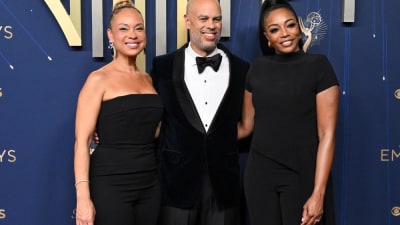
The Television Academy has once again placed its trust in Jesse Collins Entertainment to produce the Primetime Emmy Awards, marking an unprecedented fourth consecutive year for the production company. This recurring partnership, now spanning a full cycle of the broadcast under the current "wheel deal" arrangement with major networks, underscores a period of significant stability and continuity for an awards show that has often navigated shifting production landscapes. The upcoming 78th annual ceremony, scheduled to air on NBC and stream on Peacock from the Peacock Theatre in Los Angeles, will see Collins, alongside executive producers Dionne Harmon and Jeannae Rouzan-Clay, at the helm. This consistent involvement signifies a deep understanding of the Emmys' evolving needs and audience expectations. To truly grasp the significance of this repeated appointment, one must consider the recent history of the Primetime Emmys. In the years leading up to Jesse Collins Entertainment's initial involvement, the broadcast frequently changed hands, with different production entities and networks vying for the prestigious telecast. This turnover often led to varied creative approaches and, at times, a perceived lack of cohesive identity for the awards show itself. The "wheel deal," a contract that rotates the broadcast rights among ABC, CBS, Fox, and NBC, has fostered a degree of predictability, but the production itself remained a variable. Collins's team has, therefore, stepped into a role that demands not just logistical prowess but also a consistent creative vision across different network partners. The track record of Jesse Collins Entertainment in producing recent Emmy ceremonies speaks volumes. Their tenure began with the 75th awards on Fox in January 2024, hosted by Anthony Anderson, which garnered positive reviews. This was followed by the 76th Emmys on ABC, featuring Eugene Levy and Dan Levy, and the 77th on CBS, with Nate Bargatze as host. Each of these productions, while under different network umbrellas, has been overseen by the same core producing team. This continuity allows for an accumulated knowledge base, refining their understanding of what resonates with viewers and how to best honor the achievements within the television industry. Their ability to adapt to the specific brand and audience of each network is a testament to their seasoned expertise. This year's event carries particular weight as NBC celebrates its 100th anniversary. Jen Neal, NBC and Peacock’s executive VP of live events and specials, highlighted this milestone, stating, "In the year that we celebrate NBC’s 100th anniversary, we’re honored to be the home of the Emmy Awards and know we’re in great hands with Jesse and his team." This sentiment is echoed by Television Academy chair Cris Abrego, who emphasized the goal of creating a broadcast that is "current, creative, and reflective of where the industry is today." The pressure is on to deliver a show that not only marks NBC's centennial but also accurately mirrors the dynamic and often fragmented landscape of modern television production and consumption. The repeated selection of Jesse Collins Entertainment is more than just a vote of confidence; it reflects a broader trend in live event production. In an era where viewership for traditional awards shows has seen fluctuations, there's a growing emphasis on experienced producers who can deliver polished, engaging, and technically sound broadcasts. The "wheel deal" provides the network rotation, but the production team is the consistent element that shapes the viewer experience. Their deep institutional memory of the Emmys, coupled with their experience in other high-profile live events, positions them as a reliable choice to navigate the complexities of staging such a major telecast. This story is resonating with industry professionals and engaged viewers alike because it speaks to a desire for quality and consistency in a field that is constantly innovating and evolving. The television industry itself is undergoing immense transformation, with streaming, cable, and broadcast networks all vying for attention. An awards show that can feel both timeless and relevant, celebrating achievements across this diverse ecosystem, is more crucial than ever. The stability offered by a seasoned production team can provide a much-needed anchor amidst this flux, assuring audiences that the accolades will be presented with professionalism and flair. The future outlook for the Primetime Emmys, with this consistent production team, suggests a continued focus on creating a program that balances tradition with contemporary relevance. Short-term, the challenge will be to deliver a memorable 78th ceremony that honors the year's television achievements while also commemorating NBC's significant anniversary. Long-term, their continued involvement could foster a distinct identity for the Emmys broadcast, moving away from the cyclical changes of previous decades and establishing a signature style that audiences come to expect and appreciate, potentially revitalizing interest in the telecast. What viewers can do is engage with the nominations and the lead-up to the ceremony. Following the social media buzz, discussing favorite shows and performances, and tuning in live (or streaming on Peacock) are all ways to participate in the celebration. For industry insiders, the focus will be on the creative choices made during the broadcast, the efficacy of the humor, and how the show navigates the delicate balance of honoring both established stars and emerging talent. The absence of a named host at this juncture also provides a key element to watch as the production team finalizes its approach to guiding the evening's proceedings.
In Brief
Jesse Collins Entertainment secures an unprecedented fourth consecutive year producing the Primetime Emmy Awards. This marks a new era of stability for the prestigious broadcast.Advertisement



Comments
No comments yet. Be the first to comment!