
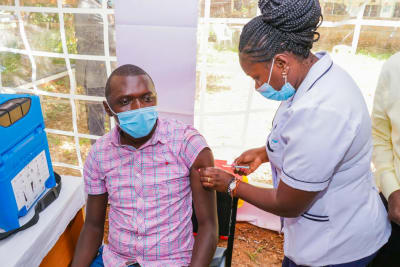
The notion that a potent disease outbreak can be swiftly contained by simply increasing diagnostic tests is a dangerous oversimplification. While crucial, enhanced testing capacity in the Democratic Republic of Congo (DRC) for the Ebola virus is merely one facet of a much larger, more complex battle against infectious diseases, a battle increasingly complicated by competing global health demands and strained resources. The World Health Organization (WHO), in collaboration with the DRC's national medical research institute, has indeed announced a significant ramp-up of diagnostic capabilities. This initiative, detailed through official channels including social media platform X, aims to bolster the country's ability to detect and respond to potential Ebola cases more rapidly. For a nation that has weathered multiple devastating Ebola epidemics, this is a critical, albeit familiar, step. The urgency is underscored by past experiences, such as the 2014-2016 West Africa outbreak, which tragically claimed over 11,300 lives, a stark reminder of the virus's devastating potential when containment efforts falter. However, the effectiveness of this diagnostic surge hinges on a robust and interconnected public health infrastructure that extends far beyond the laboratory. It requires well-trained healthcare workers on the front lines, efficient contact tracing mechanisms, secure cold chains for sample transport, and community engagement strategies built on trust. Without these foundational elements, even the most advanced testing kits can become bottlenecks, leading to delays in isolation, treatment, and ultimately, wider community spread. The DRC's vast and challenging geography, coupled with ongoing security concerns in some regions, further complicates the logistical and operational aspects of a comprehensive response. Dr. Anya Sharma, a global health security analyst not directly involved with the current WHO initiative but an expert on epidemic preparedness, cautions against viewing increased testing in isolation. "Diagnostic capacity is a vital early warning system, but it's not the entire security apparatus," she stated in a recent interview. "Without parallel investments in outbreak investigation teams, rapid response units, and crucially, sustained community dialogue and education, the diagnostic tools themselves can generate false confidence. We've seen in previous outbreaks that the weakest links in the chain are often human and systemic, not technological." The broader impact of such preparedness measures in the DRC reverberates globally. As a nation situated in a region prone to zoonotic spillover events, strengthening its health security is not just a national imperative but a matter of international public health. Lessons learned and capacities built in the DRC can serve as a model, or a warning, for other vulnerable nations. Conversely, any sliver of weakness in the DRC's defenses represents a potential breach that could allow a pathogen to traverse borders, underscoring the interconnectedness of global health security in an era of rapid travel and trade. Furthermore, the DRC's ongoing efforts to bolster Ebola response occur against a backdrop of shifting global health priorities. The COVID-19 pandemic irrevocably altered funding streams and international attention, often diverting resources and expertise away from other critical infectious disease threats, including those endemic to regions like Central Africa. While the world was engrossed in the pandemic, neglected tropical diseases and established threats like Ebola continued to require vigilance and investment. This current push for enhanced Ebola diagnostics in the DRC can be seen as an attempt to reassert focus on these persistent dangers. Specific figures highlight the scale of the challenge. The DRC's Ministry of Health has historically operated with limited budgets, often relying heavily on international aid for major public health campaigns. Securing sustained, predictable funding for not just emergency responses but also for ongoing surveillance, training, and infrastructure maintenance remains a perpetual struggle. Past outbreaks have seen substantial influxes of international funding during the crisis, which often dwindled once the immediate threat subsided, leaving a legacy of underfunded preparedness. Looking ahead, the success of the current diagnostic scale-up will be measured not just by the number of tests conducted, but by its tangible impact on containment timelines and reduced mortality. Observers will be watching closely for evidence of how effectively these enhanced capabilities are integrated into broader response strategies, the level of sustained international and national financial commitment, and the continued engagement with local communities. The true test lies in whether this renewed focus translates into a more resilient and responsive public health system capable of weathering future storms, whether they be Ebola or another emergent threat. The capacity to swiftly identify and isolate cases is, without doubt, a cornerstone of effective epidemic control. However, this vital step is but one component within a far more intricate system of public health defenses. The current efforts in the Democratic Republic of Congo to amplify its Ebola diagnostic capabilities, while commendable and necessary, must be viewed within the wider context of systemic preparedness, community trust, and the ever-present challenge of competing global health imperatives. The long-term implications of strengthening health infrastructure in a high-risk region like the DRC extend beyond immediate outbreak control. It contributes to global health security by reducing the likelihood of international spread, while also providing a blueprint for other nations facing similar threats. The success of this initiative, therefore, is not solely a Congolese concern; it is a critical indicator of our collective ability to manage the persistent and evolving landscape of infectious disease threats in the 21st century.
In Brief
The DRC is scaling up Ebola diagnostic tests, but experts warn this alone isn't enough. A comprehensive approach is needed to truly combat the threat.Advertisement




Comments
No comments yet. Be the first to comment!