
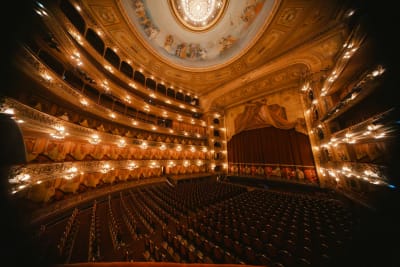
The survival of a single, aging movie palace is often dismissed as a nostalgic footnote, a quaint relic of a bygone era. Yet, the story of the Broadway Theatre of Pitman, New Jersey, unfolding as it marks its 100th anniversary, reveals a far more profound truth: these cultural anchors can serve as potent engines for urban revitalization. For decades, the economic pulse of Pitman’s Broadway district had faded to a whisper. By the mid-1990s, the commercial corridor, once a bustling hub, was a shadow of its former self. Empty storefronts outnumbered open businesses, and the area teetered on the brink of becoming a ghost town. This narrative of decline is tragically common in small towns across America, where the migration to malls and online retail has hollowed out traditional main streets. The Broadway Theatre, then, faced not just the challenge of its own longevity, but the existential threat posed by the decay of its surrounding community. This is precisely why the theater's centennial resonates so deeply today. It’s not merely a celebration of a building, but a testament to the power of community investment in cultural infrastructure. The theater’s revival, spearheaded by owners Peter and Jill Slack about 25 years ago, coincided with and arguably catalyzed the broader resurgence of Pitman’s downtown. This turnaround transformed the area from a collection of shuttered shops into a vibrant destination, even earning Pitman a spot on USA Today’s list of the “10 best small town food scenes in the US” earlier this year. The theater became the vibrant heart, drawing approximately 200,000 patrons annually, many of whom then patronize nearby restaurants and shops. The implications extend far beyond Pitman. Across the country, similar stories are emerging, or desperately need to. Communities are realizing that the preservation and active use of historic venues are not just about historical preservation; they are strategic economic development tools. When a theater like the Broadway thrives, it creates a ripple effect. It supports local employment, attracts tourism, and fosters a sense of place that is increasingly valued in an increasingly homogenized world. It demonstrates that investing in arts and culture can yield tangible economic returns, countering the narrative that such institutions are solely a drain on public or private resources. The generational shift in audience behavior, however, presents a formidable challenge for the Broadway and venues like it. Andrew Slack, son of the current owners, points to declining subscription rates and the difficulty in engaging younger demographics. The theater, which originally opened in May 1926 to a crowd of 2,000 eager for silent films and vaudeville, now faces an audience whose entertainment consumption habits are vastly different. This isn't just a local problem; it's a nationwide concern for live performance venues struggling to adapt to streaming services, TikTok, and evolving leisure preferences. The Slack family’s journey, from inheriting a struggling theater to presiding over its centennial, offers a powerful case study. Their commitment, coupled with the supportive ecosystem of Pitman’s town leadership, as Mayor Michael Razze Jr. noted, where “the whole of our downtown really works well together as a team,” has been crucial. This integrated approach, where the theater and the surrounding businesses mutually reinforce each other, is a model worth emulating. It underscores that a single entity’s success is amplified when it's part of a cohesive community strategy. The theater’s historical significance, as detailed in Richard Eldredge’s 2025 book, “Pitman’s Broadway Theatre at 100,” also highlights its role as a community bulwark. During the Great Depression, patrons donated to families in need through the theater, and during World War II, it was a focal point for raising substantial funds for the war effort. This deep-rooted connection to the community’s well-being and resilience offers a historical precedent for its potential to navigate future challenges. Looking ahead, the key question for the Broadway Theatre, and indeed for historic venues everywhere, is how to adapt without losing their soul. Will new programming models emerge that attract a younger generation? Can innovative partnerships with local businesses and educational institutions bridge the demographic gap? The next decade will likely determine whether this century-old beacon can illuminate the path forward, or if the changing tides of culture and commerce will dim its once-brilliant marquee.
In Brief
A historic New Jersey theater, once the heart of a struggling downtown, is celebrating 100 years and offering a powerful blueprint for urban revitalization. Discover how it brought a community back to life.Advertisement




Comments
No comments yet. Be the first to comment!