
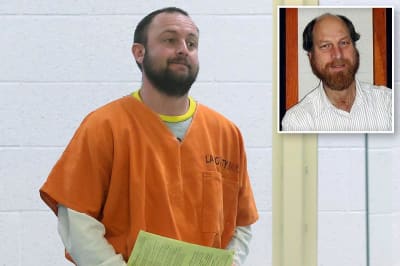
The shocking death of Dr. Carl Grillmair, a distinguished astrophysicist at Caltech, at his remote Llano home on February 16th, has sent ripples of fear and disbelief through the scientific community and beyond. What initially appeared to be a brutal home invasion and carjacking gone wrong has taken on a more chilling dimension as investigators piece together the events leading up to the murder. The suspect, 29-year-old Freddy Snyder, accused of Grillmair's killing, displayed an unnerving lack of contrition during his initial court appearance, a stark contrast to the gravity of the alleged crime. This detail, while deeply disturbing on a personal level for the victim's loved ones, also hints at a potential detachment that investigators must grapple with as they build their case. This tragedy gains a wider significance when viewed against a backdrop of escalating concerns for the safety of individuals engaged in sensitive scientific research. Grillmair's work at Caltech's IPAC Science and Data Center, focused on the cosmos and complex data analysis, placed him at the forefront of discovery. However, the fact that he was allegedly targeted by someone living mere miles away, who had previously been caught trespassing on his property and found with a loaded weapon, suggests a deeply unsettling vulnerability. The scientist had even reported the trespasser to authorities, leading to a prior arrest, yet the suspect was released, underscoring the complex challenges law enforcement faces in addressing potential threats before they escalate into irreversible violence. The ramifications of this event extend far beyond the immediate circle of Dr. Grillmair's colleagues and family. Scientists, particularly those working in fields deemed critical or cutting-edge, often operate with a degree of public anonymity that can unfortunately translate into physical vulnerability. Their research might be esoteric to the general public, but it can attract the attention of individuals with unpredictable motives. The specific nature of Grillmair's work, while not directly tied to national security in the way some nuclear research is, still represents the pinnacle of human intellectual endeavor, making its practitioners potential targets for reasons that may remain opaque. The public reaction, as is often the case with such high-profile incidents, has been a mixture of horror, anger, and a dawning realization of the potential risks faced by those pushing the boundaries of knowledge. Social media platforms buzzed with discussions, ranging from expressions of sympathy for Dr. Grillmair and his family to speculation about the suspect's motives and the perceived failures in the justice system. Hashtags mourning the loss of a brilliant mind and calling for greater protection for scientists gained traction, reflecting a collective unease about the safety of intellectual capital. This case carries an unsettling echo of historical anxieties surrounding scientists and their work, particularly during periods of geopolitical tension. While the context is different, the underlying concern for the safety of individuals possessing specialized knowledge or working on projects of significant interest can be traced back. Think of the scientists involved in wartime research or those working on early atomic programs, who often faced intense scrutiny and, in some cases, threats. The current situation, however, appears more random and less politically motivated, which can be even more frightening. It suggests that the threat might not come from a sophisticated adversary but from an unpredictable, localized source, making preventative measures more difficult to implement. Investigative documents reveal a prior encounter between Snyder and Grillmair. On December 20th, according to sheriff's officials, Grillmair contacted authorities to report a trespasser on his property. Deputies responding to the call found Snyder nearby with an unregistered, loaded rifle. Snyder's explanation for carrying the weapon – a claim that he was walking to the post office for protection against wild animals – was met with skepticism, especially since property records indicated the post office was in the opposite direction of his home. This prior incident, which resulted in a felony weapons charge, highlights a pattern of concerning behavior that, tragically, did not lead to sustained intervention before the fatal confrontation. Compounding the tragedy is the fact that prosecutors had moved to drop the charges against Snyder just weeks before the astrophysicist's murder, citing his lack of a prior criminal record. This decision, made on February 5th, less than two weeks before the shooting, raises difficult questions about the threshold for intervention when individuals exhibit potentially dangerous tendencies but lack a formal criminal history. While the legal system must balance due process with public safety, this sequence of events offers a stark case study in the complexities of preventing future tragedies. Looking ahead, the scientific community and law enforcement agencies will undoubtedly be scrutinizing the protocols for assessing and mitigating threats against researchers. The focus will be on how to better identify individuals who may pose a risk, even without a significant criminal past, and on strengthening the communication and collaboration between researchers, their institutions, and security bodies. The outcome of Snyder's trial will be closely watched, not only for justice for Dr. Grillmair but also for any insights it may offer into the factors that contributed to this devastating loss and how such events might be prevented in the future.
In Brief
The murder of Caltech astrophysicist Carl Grillmair reveals a disturbing pattern of vulnerability among scientists, raising urgent questions about their safety and the justice system's response to potential threats.Advertisement




Comments
No comments yet. Be the first to comment!