
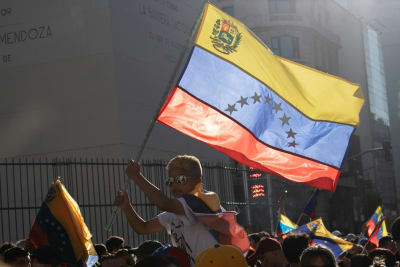
The recent transfer of businessman Alex Saab to the United States, where he faces a raft of criminal charges, represents a seismic shift in the complex geopolitical landscape surrounding Venezuela. This development is not an isolated incident but the culmination of years of intricate political maneuvering, international pressure, and shifting alliances. Saab, once a pivotal figure in Nicolás Maduro's inner circle, now finds himself at the center of a U.S. judicial process, a stark contrast to his previous status as a protected asset of the Venezuelan government. His journey from a trusted confidant to a potential informant underscores the volatile nature of power dynamics in Caracas and the long reach of U.S. law enforcement. To understand the gravity of Saab's situation, one must look back at his meteoric rise and the circumstances that propelled him into the international spotlight. For years, Saab operated as a key intermediary for the Venezuelan government, amassing a considerable fortune through lucrative state contracts. He was widely described by U.S. officials as Maduro's "bag man," instrumental in navigating international sanctions and facilitating crucial transactions for the regime. His arrest in 2020 in Cape Verde, en route to Iran, sent shockwaves through Caracas, prompting a concerted effort by Maduro's administration to secure his release. Venezuela vehemently protested his detention, even submitting a copy of what it claimed was Saab's Venezuelan passport and labeling him an "innocent Venezuelan diplomat" on a "humanitarian mission." The narrative took a surprising turn less than three years ago when Saab was part of a significant prisoner exchange, pardoned by President Joe Biden and returned to Venezuela. This repatriation was hailed as a major victory by the Maduro government, reinforcing its narrative of resilience against U.S. pressure. However, this period of respite appears to have been fleeting. Reports have since circulated about his changing fortunes within Venezuela, including demotion and a loss of key roles. The precise reasons for this shift remain opaque, but it is widely believed to be linked to internal power struggles and potentially a recalibration of alliances within the ruling Chavista coalition. Now, the Venezuelan government's decision to deport Saab to the United States marks a dramatic reversal. The official statement cited "several ongoing criminal investigations in the U.S." as the basis for this action, conspicuously referring to Saab only as a "Colombian citizen." This phrasing sidesteps Venezuelan law, which prohibits the extradition of its own nationals, while simultaneously acknowledging the U.S. legal framework he is now subject to. The implications are profound: Saab, who was once fiercely protected, is now being handed over to the very authorities who have pursued him for years, potentially as a key witness in high-profile cases against Maduro and his associates. The resonance of this story lies in its depiction of the precariousness of power and the far-reaching consequences of corruption. For many in Venezuela and across Latin America, Saab's story is a microcosm of the broader struggles with authoritarianism, economic mismanagement, and the pervasive influence of illicit finance. The fact that an individual so deeply embedded in a regime's operations can fall from grace so dramatically and be delivered into the hands of international justice speaks to a wider global effort to hold accountable those who enable kleptocratic systems. This unfolding situation should inspire a greater awareness of the intricate networks that sustain authoritarian regimes and the importance of international cooperation in combating corruption and financial crimes. It highlights how individuals, regardless of their proximity to power, can ultimately be held responsible for their actions. The story also serves as a reminder that diplomatic efforts and legal proceedings can intersect in unexpected ways, often leading to outcomes that were once considered improbable. Two specific figures illustrate the scale of the alleged financial dealings: court documents in the U.S. have previously detailed how Saab's network allegedly laundered hundreds of millions of dollars through complex schemes involving overvalued contracts for food and construction. Furthermore, the U.S. Treasury Department has previously sanctioned individuals and entities linked to Saab, citing their involvement in corrupt schemes that have enriched a select few while exacerbating Venezuela's humanitarian crisis. The coming months will be crucial in observing how Saab's testimony, if it materializes, shapes the ongoing legal battles against Venezuelan officials. His potential cooperation could unlock critical insights into the inner workings of the Maduro regime, potentially influencing the trajectory of corruption investigations and even impacting future diplomatic relations between the United States and Venezuela. The world will be watching to see if this dramatic deportation truly signals a new era of accountability or merely another twist in a long and complex saga.
In Brief
Alex Saab, once a key ally of Nicolás Maduro, has been transferred to the U.S. to face charges, marking a dramatic reversal after years of protection and a prior prisoner swap. This development could have significant implications for ongoing investigations into the Venezuelan regime.Advertisement



Comments
No comments yet. Be the first to comment!