
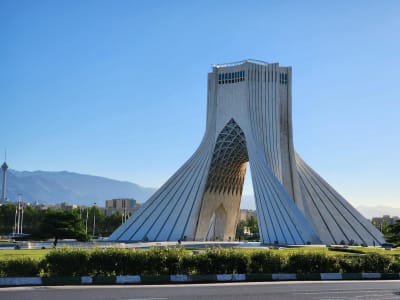
The image of citizens being instructed in the use of assault rifles on the streets of Tehran, once confined to the shadows of national security discourse, is now a deliberate public spectacle. This isn't merely a drill; it's a meticulously choreographed performance designed to convey a potent message, not just to adversaries but to the Iranian populace itself. The routine demonstrations, showcasing everything from Kalashnikov-style rifles to heavy ordnance mounted on military vehicles, are a stark departure from the veiled threats of the past, bringing the instruments of war into the everyday urban landscape. This normalization of military readiness signals a hardening of Iran's posture, suggesting a leadership more willing than ever to project strength in a volatile geopolitical climate. This overt display of armed capability matters now more than ever due to the escalating friction across the Middle East. With proxy conflicts simmering and direct confrontations with regional rivals becoming an increasingly plausible scenario, Iran appears to be demonstrating its resolve and capacity for sustained conflict. The timing is crucial; it coincides with heightened diplomatic maneuvering and a palpable sense of unease among global powers regarding the region's stability. By bringing military might into public view, Tehran aims to deter potential aggressors while simultaneously reinforcing the narrative of national defense and resilience within its borders. It's a complex balancing act, projecting strength without necessarily initiating hostilities, a delicate dance on the precipice of broader conflict. The implications of this strategy are far-reaching, affecting various segments of society. For ordinary Iranians, these displays could evoke a range of emotions, from patriotic pride and a sense of security to apprehension and fear of imminent conflict. Families are witnessing their capital transformed into a stage for military preparedness, a constant reminder of the precariousness of peace. Internationally, the message is aimed at a diverse audience: regional adversaries who may perceive this as a direct challenge, global powers seeking to de-escalate tensions, and even domestic hardliners who may be reassured by such visible displays of strength. The Revolutionary Guard, the ostensible orchestrator of these events, solidifies its role as the nation's primary defender, projecting an image of unwavering vigilance. What many international observers and media reports often miss is the dual nature of these demonstrations. They are not solely outward-facing pronouncements of military might directed at external threats. Crucially, they serve as a powerful internal propaganda tool, designed to rally domestic support and reinforce the regime's narrative of resilience against external pressures. In a country grappling with economic sanctions and internal dissent, the visible projection of strength can be an effective means of consolidating power and fostering a sense of national unity, albeit one built on a foundation of perceived external threats. This internal dimension is often underestimated, yet it is fundamental to understanding the sustained commitment to such public displays. These public showcases are occurring against a backdrop of significant geopolitical shifts. The Abraham Accords, which normalized relations between Israel and several Arab nations, have altered regional alliances, potentially isolating Iran. Simultaneously, ongoing negotiations concerning Iran's nuclear program have created an atmosphere of uncertainty. Against this backdrop, the displays of military readiness can be interpreted as an assertion of Iran's enduring regional influence and its refusal to be marginalized. The explicit mention of Kalashnikov-style rifles by the Revolutionary Guard highlights a focus on readily available, mass-producible weaponry, suggesting a strategy of widespread armament rather than reliance solely on advanced, high-tech military assets. The resonance of this story stems from its direct confrontation with the abstract nature of geopolitical threats. Instead of reading about potential conflicts in far-off diplomatic halls, people are seeing the tangible tools of war being paraded and explained in a major capital city. This visceral connection makes the possibility of conflict feel more immediate and real. Furthermore, the current global climate, marked by a resurgence of nationalistic rhetoric and an increase in international tensions, makes the concept of state-sponsored military displays particularly salient. It taps into a broader public consciousness about power, security, and the ever-present possibility of armed conflict. While the immediate focus remains on deterrence and internal consolidation, the long-term implications of such overt militarization are complex. The risk of miscalculation increases when military readiness is so visibly and publicly emphasized. A perceived escalation by one side could provoke a disproportionate response from another, leading to a dangerous spiral. The economic strain of maintaining such a visible military posture, particularly under sanctions, also presents a significant challenge. The resources channeled into these demonstrations and the broader military buildup could arguably be directed towards pressing domestic needs, a point of contention likely to be debated within Iran and by international analysts. Looking ahead, the key development to watch will be the international community's response to these persistent displays of Iranian military capability. Will they be met with increased diplomatic pressure, a recalibration of military alliances, or a further escalation of rhetoric? Furthermore, the internal reaction within Iran will be crucial. If these demonstrations fail to foster the intended sense of national unity or security, and instead breed widespread anxiety or discontent, the regime may be forced to reassess its strategy. The ultimate success of Tehran's public display of firepower will be judged not only by its effect on foreign adversaries but by its impact on the stability and cohesion of Iranian society.
In Brief
Iran's capital is now a stage for public military demonstrations, a calculated move to project strength both internally and externally amidst rising regional tensions. This in-depth analysis explores the motivations, impacts, and broader implications of Tehran's new approach to showcasing its armed forces.Advertisement

Comments
No comments yet. Be the first to comment!