
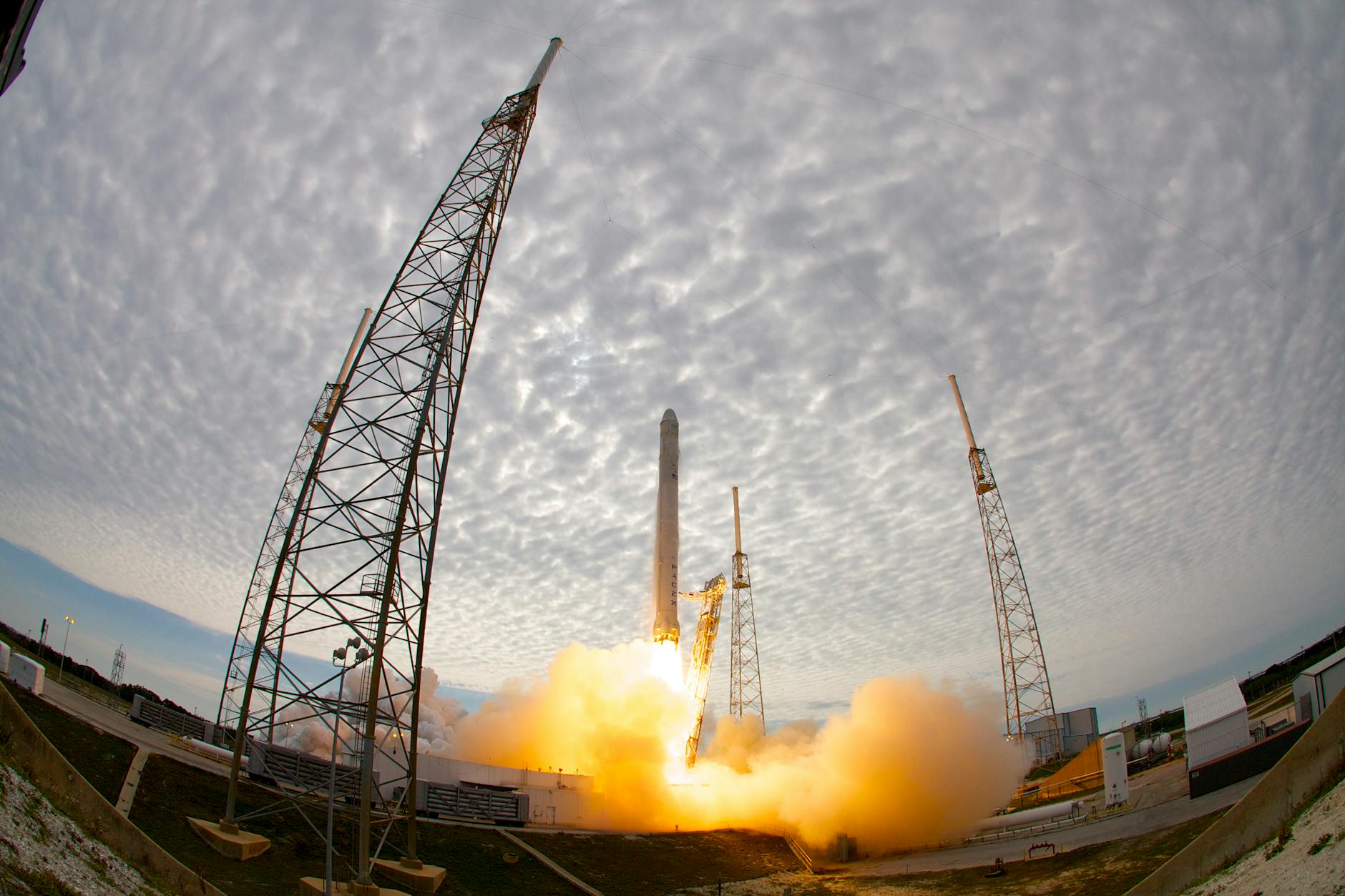

The Story in Brief
- SpaceX is reportedly preparing for a potential Initial Public Offering (IPO), a move that could significantly alter the landscape of publicly traded aerospace companies and attract substantial investment.
- The core of this potential IPO's valuation and future growth hinges on the success and scalability of Starship, SpaceX's ambitious next-generation super heavy-lift launch vehicle designed for interplanetary travel.
- Starship's development promises not only to facilitate deep space exploration but also to revolutionize terrestrial transportation, potentially enabling journeys between any two points on Earth in under an hour.
- This capability poses a direct threat to the traditional business travel industry, including airlines, hotels, and associated services, by making conventional long-haul flights and overnight stays largely redundant.
- The implications extend beyond mere travel convenience, touching upon global commerce, remote work dynamics, and the very definition of geographical proximity in a hyper-connected world.
- Investors and industry observers are closely monitoring Starship's progress, as its successful deployment could unlock unprecedented market opportunities while simultaneously disrupting established sectors.
The Human Face
For decades, the rhythm of global business has been dictated by the constraints of physical distance and the time required to traverse it. Business travelers have become accustomed to the arduous routines of airport security, cramped airplane seats, and the inevitable jet lag that accompanies crossing multiple time zones. This cycle of travel is not just time-consuming; it's physically and mentally draining, often impacting productivity and personal well-being. The prospect of a world where these barriers are dismantled by Starship technology presents a profound shift in the human experience of global interaction.
Imagine a scenario where a crucial meeting in Tokyo can be attended by an executive based in London with the same ease as commuting across town. The ability to depart, conduct business, and return within a single day, without the debilitating effects of prolonged travel, would fundamentally alter work-life balance and global collaboration. This isn't just about faster commutes; it's about reclaiming countless hours lost to transit, allowing professionals to dedicate more time to strategic thinking, innovation, and personal pursuits. The psychological impact of such a transformation, reducing the world to a more accessible scale, cannot be overstated.
However, this technological leap also introduces new considerations for individuals. The ease of instantaneous travel might blur the lines between work and personal life even further, potentially leading to expectations of constant availability. Furthermore, the accessibility of such advanced travel could exacerbate existing inequalities if not made widely available. While the promise of connecting the globe is immense, ensuring equitable access and managing the societal adjustments will be critical human challenges to navigate as Starship technology matures and potentially integrates into our daily lives.
How We Got Here
The journey toward Starship and a potential SpaceX IPO is rooted in decades of innovation and a relentless pursuit of reusable rocketry. Elon Musk's vision, initially realized with the Falcon 9 and Falcon Heavy rockets, demonstrated the viability of significantly reducing launch costs through reusability. This success paved the way for the ambitious development of Starship, a fully reusable, two-stage system designed for both Earth orbit and interplanetary missions. The company’s iterative design and testing approach, characterized by rapid prototyping and learning from failures, has accelerated development at an unprecedented pace.
The strategic decision to pursue Starship was driven by the ultimate goal of making humanity a multi-planetary species, with Mars colonization as a primary objective. However, the sheer capability of Starship—its massive payload capacity and potential for rapid point-to-point travel on Earth—opened up a secondary, yet equally transformative, application. Recognizing this dual potential, SpaceX has continued to push the boundaries of engineering and manufacturing, investing heavily in the infrastructure required to build and launch these colossal vehicles consistently and affordably.
The increasing maturity of Starship's technology, coupled with SpaceX's proven track record in the launch services market, has created a fertile ground for considering a public offering. An IPO would not only provide the capital necessary for continued Starship development and operational scaling but also allow early investors and employees to realize returns on their contributions. This potential financial milestone is intrinsically linked to Starship's perceived readiness to fulfill its ambitious promises, both in space and potentially on Earth.
Why This Cannot Be Ignored
The advent of Starship technology represents a paradigm shift with far-reaching economic and societal consequences that demand immediate attention. If Starship fulfills its promise of rapid Earth-based transit, the established multi-billion dollar business travel industry—encompassing airlines, hotels, and corporate travel agencies—faces existential disruption. Companies that have built their models around facilitating long-distance journeys will need to fundamentally re-evaluate their strategies or risk obsolescence in the face of near-instantaneous global connectivity.
Beyond the direct impact on travel, the implications ripple through global commerce and workforce dynamics. The ability to conduct face-to-face meetings across continents within hours could reshape international business operations, supply chains, and the very concept of remote work. It may accelerate globalization by reducing the friction of distance, but it could also concentrate economic power if access to this technology remains limited, creating new forms of digital and physical divides.
Furthermore, the potential SpaceX IPO itself is a significant event. A successful public offering would validate the immense private investment in space technology and could unlock further capital for ambitious projects. It would also signal a new era of publicly accessible space ventures, influencing market trends and investor behavior. Ignoring these developments means overlooking a fundamental transformation in transportation, communication, and global economic structures that is rapidly unfolding.
Possible Paths Forward
One primary path forward involves SpaceX successfully scaling Starship operations for both space exploration and terrestrial transport. This requires achieving consistent, reliable, and cost-effective launch capabilities, alongside the development of necessary ground infrastructure for rapid passenger and cargo transfer. If these technical and logistical hurdles are overcome, Starship could indeed begin to displace conventional long-haul travel, forcing incumbent industries to adapt or pivot towards niche markets that Starship cannot serve.
Another significant path is the regulatory and infrastructural adaptation required for Starship's terrestrial use. Governments and international bodies will need to establish frameworks for managing high-speed point-to-point travel, addressing safety standards, air traffic control integration (or a new paradigm), and environmental impact assessments. This path involves extensive collaboration between private enterprise and public authorities to ensure the safe and efficient deployment of such a revolutionary system.
A third, more cautious path, acknowledges the immense technical and economic challenges. Starship's primary focus may remain on space missions, with terrestrial applications developing much slower or remaining economically unviable for widespread adoption in the near to medium term. In this scenario, the disruption to business travel would be gradual, driven more by incremental improvements in existing aviation technology and the continued evolution of virtual collaboration tools, rather than a sudden revolution.
Questions People Are Actually Asking
What to Watch
- Monitor SpaceX's progress with Starship's orbital flight tests and its increasing cadence of successful launches and landings, as this is the foundational requirement for any future application.
- Keep a close eye on any official announcements or regulatory filings related to SpaceX's potential IPO, which would signal a significant step towards public market scrutiny and capital infusion.
- Track developments in the regulatory landscape concerning high-speed atmospheric transport, as new frameworks will be essential for enabling Starship's terrestrial point-to-point capabilities.
- Observe how incumbent travel and hospitality industries begin to strategize and adapt their business models in anticipation of potential disruption from rapid transit technologies.
- Follow any news or testing related to Starship's payload capacity and passenger safety systems, particularly concerning the acceleration and deceleration profiles required for Earth-based journeys.
- Analyze the evolving discourse around the economic feasibility and accessibility of Starship for non-governmental and non-space exploration purposes, including potential pricing models.

















Comments
No comments yet. Be the first to comment!