
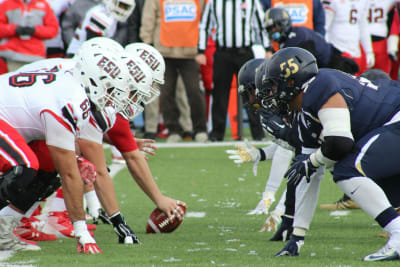
The sting of consecutive losing seasons lingers for Florida State football faithful, and the latest national rankings are doing little to soothe those anxieties. With the 2026 season on the horizon, a recent assessment by CBS Sports places the Seminoles outside the elite tier, at number 47 nationally. This position, while still within the top half of all FBS programs, represents a stark divergence from the historical dominance expected of the storied program and reflects a palpable uncertainty among fans and analysts alike about the team's immediate trajectory. For supporters accustomed to championship contention, this mid-tier ranking is a difficult pill to swallow, signaling a period of rebuilding that feels prolonged. The shifting sands of college football, particularly the seismic impacts of name, image, and likeness (NIL) deals and the unfettered access of the NCAA Transfer Portal, have created an unprecedented environment of flux. Programs that once relied on established recruiting pipelines and in-house development are now navigating a landscape where rosters can be dramatically reshaped in a single offseason. This volatility makes preseason projections inherently more challenging and, for teams like Florida State, which have experienced significant roster turnover, these rankings become a critical barometer of where they stand in this new era. The challenge isn't just about winning games; it's about adapting to a fundamentally altered competitive structure. This particular ranking resonates now because it arrives at a critical juncture for the Seminoles. Following a disappointing 5-7 record last season, the program is at a crossroads. The No. 47 placement by CBS Sports is not an isolated opinion; it mirrors a broader sentiment that the team is still in the process of proving its mettle. Betting markets, for instance, reflect this apprehension, with over/under win totals for the 2026 season often set at a modest 6.5 wins, heavily favoring the under. This suggests that oddsmakers perceive a greater likelihood of continued struggles than a swift return to form, a sentiment echoed by the team's schedule, which includes challenging matchups against perennial powerhouses. The fan base, a passionate and dedicated group, finds itself caught between hope and apprehension. They recall the glory days of championships and ACC dominance, a stark contrast to the recent reality of missed bowl games and disappointing finishes. This dissonance fuels the current level of scrutiny and discussion surrounding the team's standing. The question isn't just about individual player performance, but about the program's overall identity and its ability to compete at the highest level in an increasingly competitive environment, especially within the ACC where rivals are also adapting to the new NIL and portal dynamics. Looking at the schedule, the path ahead for Florida State appears arduous, with few breathing room games. Only Boston College, ranked 98th by CBS Sports, and New Mexico State, at a distant 128th, are projected to finish below the Seminoles. This means a significant portion of their 2026 campaign will be against teams expected to be competitive, or even superior. The season opener against New Mexico State and a Week 2 clash with SMU will offer early indications of the team's readiness, but the true tests will come later, notably the Week 3 road game against Alabama and the late-season showdowns with Clemson and rival Florida. Several factors contribute to this precarious positioning. The departure of key players through the transfer portal, coupled with the need to integrate new talent acquired through both recruiting and the portal, presents a significant coaching challenge. Rebuilding cohesion and establishing a consistent identity under new leadership or with significant roster changes takes time. Furthermore, the financial implications of NIL mean that retaining top talent and attracting elite recruits is now an arms race, one that Florida State must successfully navigate to regain its footing among the nation's elite. The implications of these rankings extend beyond fan morale. For prospective recruits and current players contemplating their futures, a perceived downward trend can influence decisions. College football programs are businesses, and their rankings, media exposure, and perceived competitive standing directly impact their ability to attract and retain talent. This creates a self-perpetuating cycle where lower rankings can make it harder to recruit the caliber of players needed to improve those very rankings. Ultimately, the Seminoles' current standing is a snapshot in time, a reflection of the present uncertainty rather than a definitive prophecy. While CBS Sports' No. 47 ranking serves as a wake-up call, it also presents an opportunity for the team to rally and exceed expectations. The true measure of Florida State's 2026 season will not be determined by preseason projections, but by their performance on the field when the lights are brightest, proving whether they can navigate the complexities of modern college football and reclaim their place among the nation's elite. What unfolds this fall camp, and how effectively the coaching staff integrates new and returning talent, will be crucial to watch.
In Brief
Florida State's football program faces scrutiny as recent rankings place them outside the top 25, highlighting the challenges of NIL and the transfer portal.Advertisement




Comments
No comments yet. Be the first to comment!