
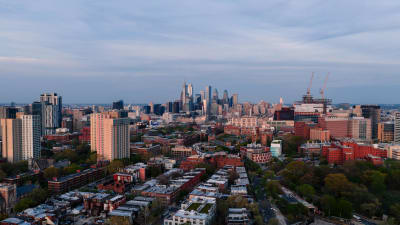
For decades, the residents of Eastwick, a neighborhood in Southwest Philadelphia historically prone to severe flooding, have served as their own informal, high-alert warning system. This reliance on community vigilance reached a breaking point during Tropical Storm Isaias in 2020, when unprecedented water levels submerged streets, destroyed homes, and left a trail of ruined possessions. "We were unprepared," recounted Brenda Whitfield, a 78-year-old block captain and lifelong Eastwick resident. "The flood came without a warning and I realized we have to help ourselves because nobody else was coming to help us." Her poignant words underscore a stark reality: for communities like Eastwick, the threat of rising waters isn't an abstract concept but a recurring nightmare demanding constant, personal preparedness. This situation is not new to Philadelphia. Eastwick, along with other low-lying areas, has grappled with its geography and aging infrastructure for years. The neighborhood's vulnerability is exacerbated by its location at the confluence of waterways and its historical development on what was once wetland. Past flood events, like the devastating impact of Hurricane Agnes in 1972, have left indelible marks on the community, forcing residents to develop coping mechanisms, such as teaching children to monitor creek levels as a precautionary measure. These community-driven efforts, while testament to residents' resilience, highlight a systemic failure to provide adequate protective infrastructure and early warning systems. The recent unveiling of a pilot flood monitoring program marks a significant, albeit belated, response to years of advocacy. The initiative involves the installation of a network of flood gauges and cameras in Eastwick and other at-risk areas across the city. These sensors are designed to collect real-time data on critical factors such as water levels, barometric pressure, rainfall intensity, and temperature. This granular information is intended to feed into a centralized system, providing city officials with an unprecedented understanding of potential flood triggers and their progression. Dominick Mireles, Philadelphia's deputy managing director for community safety, explained the project's immediate objective: "Our goal now is to take in the data, to learn more about what it takes to manage a system like this, and to continue to assess where the flooding risk is across the city." The program, which began in 2024 and has taken approximately two years to reach this initial deployment phase, represents a technological leap forward. It aims to move beyond reactive responses to a more proactive stance, using predictive analytics to anticipate and mitigate flood impacts before they become catastrophic. The path to this technological intervention was fraught with delays. Community organizers and residents of Eastwick, galvanized by the 2020 storm, engaged in persistent advocacy, organizing marches and lobbying city and state representatives. Their efforts were met with some success, but a crucial setback occurred when federal funding for flood prevention projects was curtailed due to cuts initiated during the Trump administration. These delays, spanning over six years, meant that critical infrastructure improvements and technological solutions were postponed, leaving communities vulnerable for longer than necessary. The economic ramifications of persistent flooding are substantial. Beyond the immediate costs of property damage and displacement, chronic inundation erodes property values, discourages investment, and places a significant burden on municipal services for emergency response and cleanup. For residents, the financial strain of repeated losses, coupled with the psychological toll of living under constant threat, can be debilitating. The new monitoring system, if effective, could lead to significant savings by enabling earlier evacuations and protective measures, thus reducing the scale of disaster. Socially, the impact of flooding disproportionately affects lower-income communities and communities of color, which are often situated in flood-prone areas due to historical redlining and discriminatory development practices. Eastwick, a predominantly Black community, exemplifies this pattern. The constant threat and disruption of floods can lead to community fragmentation, health issues related to mold and stress, and a pervasive sense of inequity. The new technology offers a glimmer of hope for a more equitable approach to public safety and resilience. The future outlook for flood management in Philadelphia hinges on the successful implementation and integration of this new technology. While the pilot project is a promising start, its long-term effectiveness will depend on sustained investment, robust data analysis, and clear communication protocols with residents. The city must also continue to invest in traditional infrastructure upgrades, such as improved drainage systems and green infrastructure solutions, to complement the early warning capabilities. The lessons learned from the community's self-reliance over the years must inform the city's approach, ensuring that technology serves to empower, not replace, community resilience. What to watch next will be the system's performance during the upcoming storm seasons. Early alerts, their accuracy, and the speed at which the city can translate data into actionable advisement for residents will be critical indicators of success. Furthermore, the city's commitment to expanding this technology to other vulnerable neighborhoods and integrating it with broader climate adaptation strategies will determine its lasting impact on Philadelphia's resilience.
In Brief
Philadelphia is deploying advanced flood monitoring technology in Eastwick and other vulnerable neighborhoods, a move years in the making following community advocacy and devastating storms.Advertisement




Comments
No comments yet. Be the first to comment!