

Key Takeaways
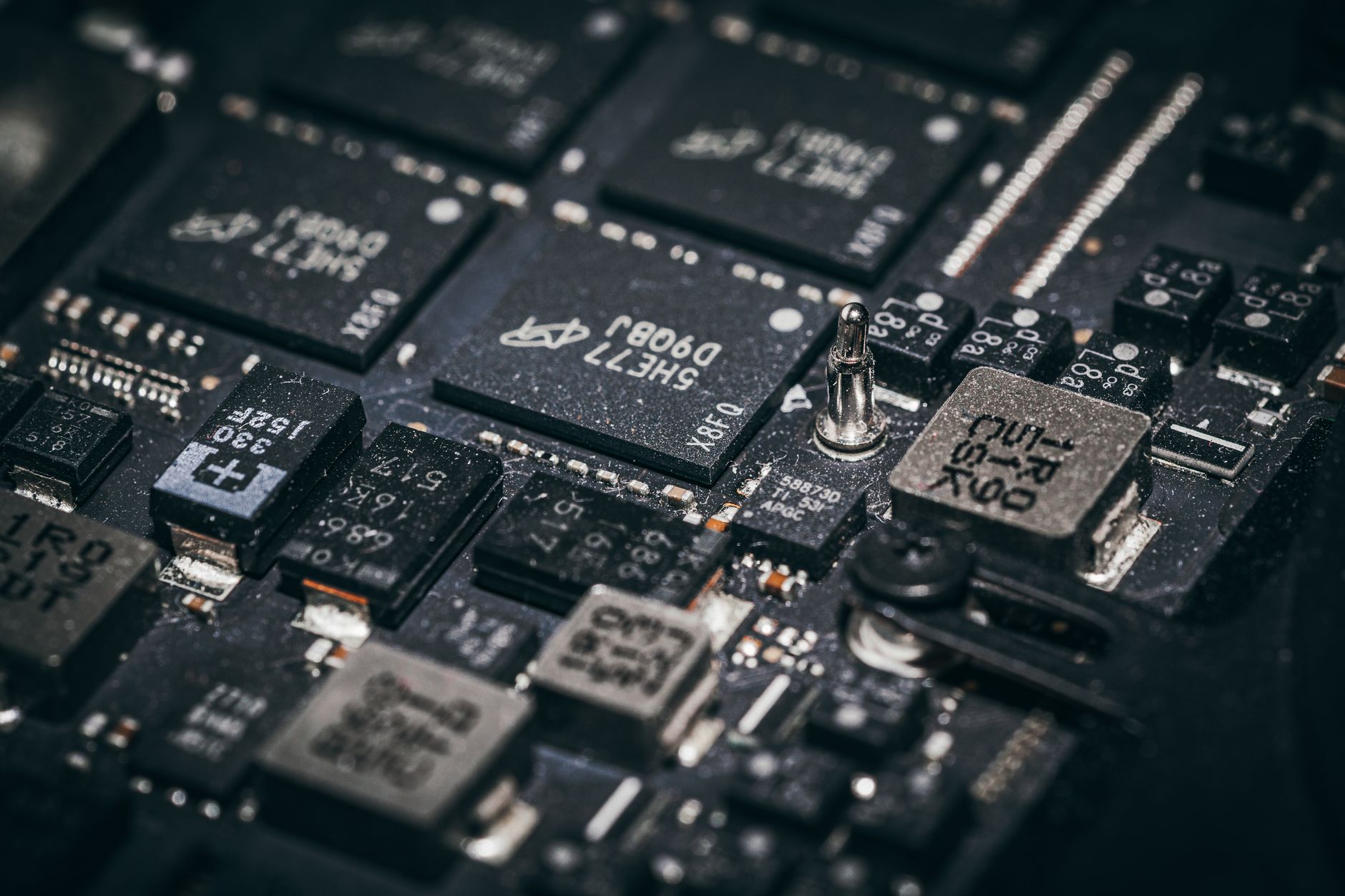
- IBM's Historic Achievement: IBM has officially unveiled the world's first sub-1 nanometer (sub-1nm) chip technology, marking a monumental leap forward in semiconductor manufacturing and pushing the boundaries of what was previously thought possible in silicon engineering.
- Beyond 2nm Node: This breakthrough significantly transcends the current leading-edge 2-nanometer node, demonstrating an unprecedented ability to pack more transistors into a smaller area, which is crucial for continued advancements in processing power and energy efficiency across all digital domains.
- Exponential Performance Gains: The new sub-1nm architecture promises to deliver exponential improvements in both computational performance and energy efficiency, paving the way for significantly faster, more powerful, and longer-lasting electronic devices across various applications.
- Revolutionary Applications: This cutting-edge technology is poised to revolutionize key sectors, including artificial intelligence, high-performance cloud computing, advanced mobile devices, and the burgeoning Internet of Things (IoT), enabling capabilities previously confined to science fiction.
- Innovative Materials and Techniques: Achieving this milestone required pioneering the use of novel materials and sophisticated manufacturing techniques, effectively overcoming the formidable physical and engineering challenges associated with scaling transistors to such atomic-level dimensions.
- Global Leadership in R&D: This announcement solidifies IBM's enduring position at the absolute forefront of advanced semiconductor research and development, reaffirming its critical role in shaping the future trajectory of the global technology landscape and maintaining competitive advantage.
- Shifting Industry Landscape: The introduction of sub-1nm technology signals a profound shift in the competitive dynamics of global chip manufacturing, potentially accelerating the innovation race among leading semiconductor firms and influencing future investment strategies worldwide.
Background
For decades, Moore's Law has served as the guiding principle for the semiconductor industry, predicting a doubling of transistors on integrated circuits approximately every two years. However, as transistor sizes approached atomic scales, the physical limits of silicon and conventional manufacturing techniques presented increasingly formidable challenges. Industry experts frequently debated the imminent "end of Moore's Law," as the energy efficiency and quantum effects at these minuscule dimensions became significant hurdles. IBM, with its rich history of fundamental research and development in materials science and computing, has consistently been at the forefront of pushing these boundaries, contributing foundational innovations that have shaped the modern digital world. This latest achievement is a testament to their sustained commitment to overcoming these perceived limitations through relentless innovation.
The announcement of sub-1 nanometer chip technology represents a dramatic leap beyond the current state-of-the-art. While leading manufacturers are still ramping up production for 5nm and 3nm nodes, and 2nm technology is on the near horizon, IBM's breakthrough ventures into uncharted territory. A nanometer is one-billionth of a meter, and at sub-1nm, we are talking about structures approaching the size of a few atoms. This advancement means fitting an unprecedented number of transistors onto a single chip, leading to significantly denser and more powerful integrated circuits. The ability to control and manipulate materials at such a fine scale is a monumental engineering feat, requiring entirely new approaches to lithography, etching, and material deposition.
This monumental achievement is not merely the result of a single discovery but rather the culmination of years of intensive research, substantial investment, and collaborative efforts. IBM's Albany Nanotech Complex, a hub for public-private partnerships, has been instrumental in fostering an ecosystem where leading researchers and engineers from academia and industry converge to tackle the most complex challenges in semiconductor science. This collaborative model, involving partners and consortia, has allowed for the pooling of resources, expertise, and intellectual capital necessary to overcome the immense technical hurdles inherent in developing next-generation chip architectures. The sheer complexity of fabricating structures at this scale necessitates a holistic approach, from novel materials exploration to advanced process integration and sophisticated metrology.
Why It Matters
This sub-1 nanometer technology is poised to fundamentally transform the devices we interact with daily, delivering unprecedented levels of performance and energy efficiency. Imagine smartphones with multi-day battery life that process complex AI tasks instantaneously, or laptops that rival supercomputers in raw processing power while remaining cool and silent. The dramatic reduction in power consumption per transistor means that devices can perform more computations with less energy, extending battery life significantly for mobile electronics and reducing operational costs for data centers. This isn't just about speed; it's about enabling a new generation of personal computing experiences that are more intuitive, responsive, and seamlessly integrated into our lives, demanding immediate attention from consumers and manufacturers alike.
Beyond consumer electronics, the implications for emerging technologies are truly revolutionary. Artificial intelligence, which thrives on massive computational power, will see exponential acceleration in its capabilities, enabling more sophisticated models, faster training times, and real-time inference at the edge. The Internet of Things (IoT) will become vastly more intelligent and pervasive, with tiny, energy-efficient chips powering a myriad of smart sensors and devices capable of complex local processing. Furthermore, this breakthrough lays crucial groundwork for advancements in high-performance computing, critical for scientific research, drug discovery, and climate modeling, while also potentially influencing the future trajectory of quantum computing architectures by providing a platform for integrating control electronics at unprecedented densities.
The strategic importance of this technological leap extends far beyond mere technical specifications; it carries profound geopolitical and economic ramifications. National competitiveness in the 21st century is increasingly tied to leadership in advanced semiconductor manufacturing. This breakthrough solidifies IBM's, and by extension, the United States', position at the forefront of this critical industry, potentially reshaping global supply chains and reducing reliance on foreign fabrication facilities for cutting-edge components. It ignites an accelerated innovation race among global powers, compelling other nations and corporations to intensify their own research and development efforts to avoid falling behind in the foundational technology that underpinning virtually every modern industry. The economic impact will be substantial, driving new industries, creating high-value jobs, and fostering an environment of accelerated technological progress.
Ground Reality
While IBM's sub-1 nanometer breakthrough represents a monumental scientific achievement, the journey from laboratory prototype to mass production is fraught with significant challenges. Current leading-edge chip manufacturing facilities, or fabs, are incredibly complex and expensive, requiring billions of dollars in investment and years to construct. Producing chips at sub-1nm scales introduces unprecedented hurdles in terms of yield rates, defect control, and the sheer precision required for every step of the fabrication process. The lithography tools, etching techniques, and material deposition methods must operate with atomic-level accuracy, making even microscopic imperfections potentially catastrophic for chip functionality. The industry must now grapple with scaling this intricate process for commercial viability.
The timeline for commercialization and widespread integration of sub-1nm technology into actual consumer products remains a critical consideration. Historically, there is a significant lag between a fundamental research breakthrough and its market readiness, often spanning several years. This period is dedicated to refining manufacturing processes, optimizing designs for cost-effectiveness, and ensuring consistent, high-volume production with acceptable yield rates. While IBM has demonstrated the feasibility of the technology, transferring this knowledge to foundry partners for large-scale manufacturing will require extensive collaboration and further engineering innovation. Therefore, while the promise is immense, consumers should temper expectations for immediate availability of sub-1nm powered devices, as the practical hurdles are still substantial.
For developers and consumers, the practical implications will not be instantaneous but will gradually unfold over the next decade. Initially, this technology will likely be adopted in high-value, high-performance computing segments, such as enterprise data centers, specialized AI accelerators, and perhaps military applications, where the cost premium can be justified by the performance gains. As manufacturing processes mature and costs decrease, the technology will trickle down to mainstream consumer electronics. This means that while your next smartphone might not be sub-1nm, the infrastructure powering its cloud services or the AI algorithms it uses will likely benefit from these advancements, leading to indirect but tangible improvements in user experience, responsiveness, and overall digital capability.
What Experts Are Saying
Industry analysts and semiconductor experts have largely lauded IBM's sub-1 nanometer announcement as a groundbreaking technical marvel, reaffirming the company's prowess in fundamental research. Dr. Sarah Chen, a leading analyst at TechInsights, remarked, "This isn't just an incremental step; it's a paradigm shift in how we approach transistor scaling. IBM has effectively rewritten the playbook for semiconductor physics, demonstrating that Moore's Law, while challenged, is far from dead when innovation is relentlessly pursued." Many see this as a critical validation of continued investment in advanced materials science and novel manufacturing techniques, providing a much-needed shot in the arm for the entire semiconductor ecosystem and inspiring further research across the globe.
Despite the widespread acclaim, some experts have raised pertinent questions regarding the practicalities of mass production and the economic viability of such advanced nodes. Dr. Michael Lee, a professor of electrical engineering at MIT, noted, "While the lab demonstration is undeniably impressive, the jump to high-volume manufacturing at sub-1nm presents unprecedented challenges in terms of defect density, cost per wafer, and the sheer capital expenditure required for next-generation fabs. We must carefully consider if the performance gains will justify the immense investment and potential yield issues in the initial phases." There's also debate about whether the industry should focus more on architectural innovations and specialized chip designs rather than solely pushing for smaller geometries, given the escalating costs of each successive node.
The broader implications for the semiconductor industry are significant, potentially accelerating the timeline for future innovation and intensifying the global competition for technological supremacy. Some analysts predict that this breakthrough could force competitors to re-evaluate their own roadmaps, potentially shifting research focus towards similar material science challenges or even exploring alternative computing paradigms like neuromorphic or quantum computing with renewed urgency. "IBM's move puts immense pressure on other foundries and chip designers to either license this technology or redouble their own efforts to catch up," stated industry consultant James Davies. This could lead to a wave of new partnerships, mergers, and acquisitions as companies seek to secure access to cutting-edge intellectual property and manufacturing capabilities, fundamentally reshaping the competitive landscape.

Frequently Asked Questions
What Happens Next
Following this groundbreaking announcement, the immediate focus for IBM will undoubtedly shift towards further refining the sub-1 nanometer technology and exploring pathways for its eventual commercialization. This involves rigorous testing, optimizing the manufacturing process for higher yields, and engaging deeply with potential foundry partners. While IBM is a leader in research, it typically licenses its process technology to major chip manufacturers like Samsung or TSMC for mass production. These partnerships will be critical in translating laboratory success into a scalable, economically viable fabrication process. Expect a period of intense collaboration and intellectual property transfer as the industry gears up to absorb and implement these radical advancements.
The industry's response to IBM's breakthrough will be multifaceted and highly competitive. Other leading semiconductor firms, already investing heavily in their own next-generation nodes, will likely accelerate their research and development efforts to either match or surpass this new benchmark. This could trigger a new wave of investment in advanced materials, lithography equipment, and process innovation across the global supply chain. The race for sub-1nm dominance will intensify, potentially leading to increased strategic alliances, intellectual property disputes, and a heightened focus on securing talent and resources. Companies that fail to adapt or innovate quickly risk falling behind in this critical technological arms race, which could have significant long-term implications for market share and national technological sovereignty.
Looking further ahead, the long-term vision enabled by sub-1 nanometer technology extends far beyond incremental improvements in existing devices. This level of miniaturization and efficiency could unlock entirely new computing paradigms and applications that are currently unimaginable. We could see truly ubiquitous AI, embedded deeply into our environments, or highly personalized medicine driven by on-device genomic analysis. This breakthrough also provides a critical foundation for integrating diverse computing architectures, such as quantum processors, with classical control systems on a single chip, paving the way for hybrid computing solutions. The path to commercial viability will be challenging, but the potential rewards — a future powered by exponentially more intelligent, efficient, and interconnected technologies — are immense and offer a hopeful glimpse into the next era of digital innovation.















Comments
No comments yet. Be the first to comment!