
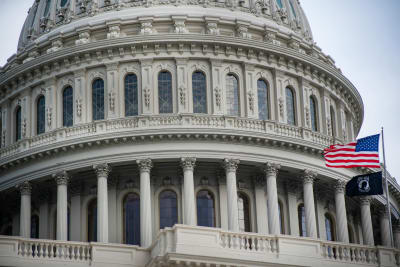
The federal government is facing a significant challenge: a widening talent gap exacerbated by a substantial workforce departure and an impending wave of retirements. Last year alone, the government saw over 300,000 workers leave its ranks, a figure that has prompted urgent action. This exodus, coupled with a historically low representation of mid-career professionals and a demographic cliff of upcoming retirements, has created a critical juncture for public service. To understand the gravity of this situation, one must look back at the post-World War II era, a time when federal employment often represented a stable, lifelong career. Unlike today, where private sector opportunities frequently lure top talent with higher salaries and perceived greater dynamism, public service once held a unique allure. It was seen as a direct way to contribute to the nation's progress, offering a sense of purpose and security that was hard to match. However, decades of shifting economic landscapes, evolving career expectations, and the rise of specialized tech industries have gradually eroded this traditional appeal, leaving the government playing catch-up in the modern labor market. Currently, the Office of Personnel Management (OPM) is spearheading initiatives to reverse this trend. Director Scott Kupor has openly acknowledged the need for a seismic shift in how the government attracts and retains its workforce. A key program, the U.S. Tech Force, launched late last year, aims to bring approximately 1,000 engineers into federal service for two-year assignments. This innovative approach seeks to inject specialized skills into government agencies while offering a flexible pathway for tech professionals who may not envision a lifelong federal career. The program's success could serve as a crucial test case for future talent acquisition strategies. The demographic data paints a stark picture: only 7% of the current federal workforce possesses five to seven years of experience, a critical mid-career segment that typically drives innovation and mentorship. This contrasts sharply with the broader American workforce, where this demographic constitutes 22%. Compounding this issue, a significant portion of the existing federal workforce will become eligible for retirement within the next 15 years, threatening to create knowledge vacuums and further strain agency operations. This dual challenge of attracting new talent and retaining experienced personnel is unprecedented in recent history. Beyond simply filling vacancies, the government is also focused on enhancing the overall performance culture. Kupor has emphasized the need to better reward high-achieving employees and streamline processes for addressing underperformance. The traditional, time-based promotion system is being re-evaluated, with a push to recognize exceptional contributions regardless of an employee's tenure. The goal is to ensure that every team member contributes effectively, fostering an environment where merit is recognized and rewarded promptly, thereby boosting morale and productivity. This story resonates deeply because it touches upon a fundamental question: who will run the government and how effectively will they do it? The idea of public service, once a cornerstone of national identity, is being tested. Many citizens rely on federal agencies for essential services, from national security and infrastructure to social programs and scientific research. A weakened federal workforce directly impacts the quality and efficiency of these vital functions, creating a ripple effect across society. The desire for competent, responsive government is a sentiment shared across the political spectrum. There's a historical parallel that adds a layer of urgency: the early 20th century, during which the U.S. grappled with professionalizing its civil service. Following periods of political patronage and inefficiency, reforms were enacted to create a merit-based system. Today's challenges, while different in nature, echo that era's need for modernization and strategic workforce planning. The current administration's efforts can be seen as a contemporary attempt to ensure the federal government remains a capable and effective institution for the 21st century. Looking ahead, the success of programs like U.S. Tech Force will be critical. Observers will watch closely to see if these initiatives can attract the desired talent and if the cultural and procedural reforms can foster a more dynamic and responsive work environment. The government’s ability to adapt its recruitment, retention, and reward strategies will determine its capacity to meet the complex challenges of the future. The ongoing integration of technology, including AI, will also play a significant role, but human expertise and dedicated public servants remain irreplaceable.
In Brief
Thousands of federal jobs are vacant as retirements loom. Discover the government's ambitious plans to attract tech talent and reform its workforce for the future.Advertisement





Comments
No comments yet. Be the first to comment!