
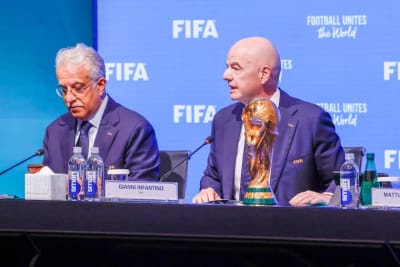
The roar of the crowd at the FIFA World Cup is often drowned out by a more persistent, complex chorus: politics. For fans in the United States, Canada, and Mexico, this year's tournament, staged on North American soil, brings the global stage of international soccer directly to their doorstep, forcing a reckoning with the sport's deeply intertwined history with geopolitical tension. Unlike previous tournaments hosted in distant lands, the current political turbulence surrounding the event is no longer an abstract concept; it’s a palpable reality unfolding in their own neighborhoods and media landscapes. This year's World Cup is particularly fraught due to a confluence of factors, including the ongoing conflict involving host nation Iran and the United States, a situation that has cast a long shadow over the team's participation. Reports indicate that following the assassination of Iran's Supreme Leader Ayatollah Ali Khamenei, Iran's sports minister initially declared their withdrawal from the tournament. This was followed by a plea to FIFA to relocate Iran's matches to Mexico, a request that was swiftly denied by the governing body, highlighting the delicate balancing act FIFA must perform between sporting integrity and international diplomacy. The political undercurrents are not a new phenomenon for the World Cup. Tracing its origins back to Uruguay in 1930, where the event was leveraged for national prestige by its hosts, the tournament has consistently served as a platform for political expression and manipulation. Italy under Benito Mussolini in 1934 used the World Cup to project an image of fascist strength, and in 1978, Argentina's military junta operated a clandestine detention center mere miles from the stadium hosting the final, a stark reminder of the human rights abuses that have coincided with the spectacle of global football. Data from past tournaments underscores this historical pattern. For instance, the 2018 World Cup in Russia and the 2022 tournament in Qatar were both mired in controversy regarding human rights records and geopolitical concerns. This year's event, with its co-hosting arrangement across three North American nations, including the United States, a long-established democracy, presents a unique challenge. The U.S. government's stance on Iran's participation has been notably ambivalent, with former President Trump reportedly expressing indifference to Iran's presence, a sentiment that allegedly prompted FIFA president Gianni Infantino to seek direct engagement with the White House to ensure the team's involvement. The human element of these political entanglements is profound. Families and individuals with ties to the nations involved find themselves navigating a complex web of national allegiances and personal anxieties. The decision-making processes within FIFA, influenced by powerful political figures and national interests, can have direct consequences on the lives of athletes and the emotional investment of fans. The report of Infantino's close relationship with former President Trump, and his subsequent public statements on Instagram seemingly aimed at appeasing political leaders, illustrate the pressures at play, blurring the lines between sport and statecraft. This story resonates deeply because it taps into a fundamental question: should sports remain a sanctuary from the political arena, or are they an inextricable part of the global social fabric? For ordinary citizens, the World Cup represents a shared passion, a moment of collective joy and national pride. When this unifying force becomes entangled with divisive political issues, it can fracture communities and force individuals to confront uncomfortable truths about the world they inhabit. The specter of state-sponsored violence and diplomatic maneuvering overshadowing athletic achievement challenges the idealized notion of sport as a pure, apolitical competition. Stakeholder views are sharply divided. While some officials and fans advocate for a strict separation of sports and politics, others argue that ignoring political realities is naive and that sporting events have always been, and will continue to be, stages for broader societal dialogues. FIFA, caught in the middle, faces immense pressure to maintain its neutrality and ensure fair play, while simultaneously navigating the demands of host nations, participating countries, and influential political actors. The organization's response to Iran's requests, and the behind-the-scenes diplomacy, reveal the immense challenges of managing such a globally significant event. The immediate future holds significant implications. All eyes will be on how the tournament unfolds on the field, but equally important will be the diplomatic and political currents that continue to shape the narrative. Watch for any further statements or actions from FIFA, national governments, and activist groups concerning the human rights and political dimensions of the World Cup. The way these issues are addressed, or ignored, will set precedents for future international sporting events, impacting how the world views the intersection of sport, politics, and global affairs.
In Brief
This year's World Cup is deeply entangled with political tensions, from host nation conflicts to diplomatic pressures. Discover how geopolitical realities are impacting the global sporting spectacle.Advertisement


Comments
No comments yet. Be the first to comment!