
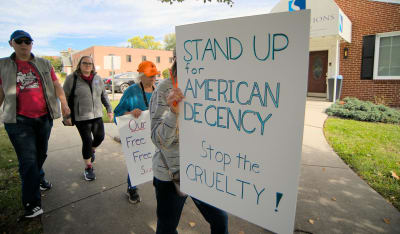
The quiet moment occurred not on a grand stage, but during a seemingly routine television interview. George W. Bush, a figure often associated with sharp political discourse, found himself discussing his post-presidency conduct. When prompted about his unusual restraint in publicly criticizing his successors, particularly Barack Obama, Bush offered a surprisingly personal rationale, hinting at a deeper consideration beyond mere political strategy. This restraint, Bush revealed, stems from a conscious decision to step away from the trenches of political warfare. Having experienced the intense scrutiny and personal attacks inherent in the presidency, he chose not to perpetuate that cycle. It's a stance that many observers note stands in stark contrast to the prevailing tenor of contemporary political dialogue, where former leaders often engage in vocal critiques of their replacements. The immediate catalyst for this revelation, and its subsequent social media buzz, was Bush's playful, yet telling, assertion that if he *were* to engage in such public sparring, Michelle Obama would no longer consider him a friend. This lighthearted remark underscored a genuine, if unexpected, camaraderie that has developed between the former president and the former first lady, a bond famously solidified during a somber funeral. The public reaction to this sentiment was swift and polarized. Many on platforms like Threads and YouTube seized upon Bush's words as a beacon of "common decency," a stark illustration of how political figures once navigated disagreements with a modicum of respect. They contrasted his approach with what they perceive as a more combative and less dignified present, invoking historical examples of peaceful power transitions. Others, however, voiced frustration, arguing that silence in the face of perceived political missteps is a disservice, suggesting that prominent former leaders have a responsibility to speak out more forcefully. This friendship, forged in the unlikely setting of Senator John McCain’s funeral in 2018, has become a symbol for many of the possibility of human connection transcending partisan divides. It challenges the notion that deeply held political differences must necessarily translate into personal animosity. The shared laughter and whispered exchanges at that event, captured by cameras, became a talking point, illustrating a rapport that many found both surprising and hopeful. However, the deeper systemic issue illuminated by Bush's comments is the erosion of civility in public discourse. The expectation that former presidents should remain silent, or conversely, the pressure for them to engage in public debates, reflects a political environment that increasingly rewards confrontation over consensus. Bush's personal choice highlights a broader societal question: Can we foster a political culture where constructive disagreement doesn't devolve into acrimonious public feuds, especially when personal relationships are involved? His decision to avoid public criticism isn't just about personal preference; it speaks to the potential consequences for bipartisan relationships. The ease with which he invoked Michelle Obama’s potential disapproval suggests that even in the highest echelons of power, personal bonds can serve as informal guardrails against extreme political rhetoric. This dynamic, while not explicitly codified, represents a subtle but significant aspect of political decorum. This particular anecdote, resurfacing now, serves as a poignant reminder of a different era of political engagement. While some may lament Bush’s reluctance to be more vocal, his reasoning points toward a deliberate choice to prioritize a certain type of personal integrity and to opt out of a system he perceives as increasingly toxic. The challenge for the future is whether this model of restraint can gain traction in a media landscape that often amplifies conflict. Looking ahead, it will be crucial to observe if this quiet commitment to avoiding personal attacks sets a precedent or remains an anomaly. The ongoing political climate will undoubtedly test the boundaries of such civility, and whether other former leaders adopt a similar posture or continue down a more confrontational path remains a significant question for the nation's political health.
In Brief
George W. Bush reveals a personal reason for avoiding public criticism of presidents after him, sparking debate about political civility and surprising friendships.Advertisement



Comments
No comments yet. Be the first to comment!