
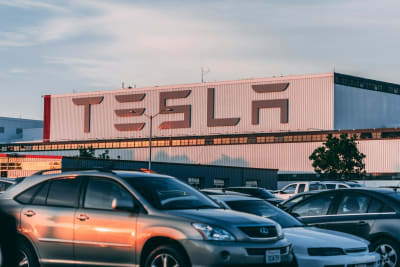
Governor Ron DeSantis has offered a surprisingly nuanced take on electric vehicles, publicly acknowledging the superior engineering and consumer appeal of Tesla products while maintaining his firm opposition to government mandates pushing widespread EV adoption. This apparent contradiction highlights a growing tension in the automotive sector: the undeniable market success driven by technological innovation versus the politically charged debate surrounding environmental policy and energy transition. DeSantis's remarks, made during an online exchange, suggest a pragmatic recognition of what consumers and the market value, even as he steers clear of endorsing a complete shift away from internal combustion engines. His commentary arrives at a critical juncture. Tesla, the undisputed leader in the EV space, has cultivated a fiercely loyal customer base not primarily through environmental appeals, but through demonstrable advancements in software, performance, and a unique brand identity. A recent report indicated that Tesla's Full Self-Driving (FSD) software is a significant draw, with one family citing its purchase of five Model Y vehicles predominantly due to this advanced feature. This underscores a key point: for many consumers, the allure lies in cutting-edge technology and perceived future benefits, rather than solely in emissions reduction. The governor’s perspective aligns with a broader philosophical stance that champions market forces over regulatory intervention. He explicitly stated that vehicles should succeed based on their own merits – technological superiority, safety features, and performance – mirroring the very principles that propelled Tesla to its dominant market position. This viewpoint inherently questions the efficacy and fairness of government policies that might artificially prop up less competitive technologies or penalize established ones, such as traditional gasoline-powered trucks he once favored. This stance is not without historical precedent. Throughout the automotive industry's evolution, innovation has been the primary engine of progress. From the assembly line to the introduction of airbags, market leaders have consistently been those who best anticipate and deliver on consumer desires for better, safer, and more efficient transportation. Tesla's ascent, driven by its integrated approach to hardware, software, and a direct-to-consumer model, is a modern iteration of this long-standing pattern. The current landscape sees Tesla not just leading in sales but also in brand loyalty. Data from S&P Global Mobility reveals that as of February 2026, an impressive 61.1% of Tesla owners choose to remain with the brand for their next vehicle purchase. This statistic is a powerful testament to customer satisfaction and the perceived value proposition offered by the company, a value seemingly rooted in the advanced technology that DeSantis himself has acknowledged. Furthermore, Tesla's strategic pivot towards emphasizing its autonomy features as a growth driver is yielding results. The company reported a substantial 51% year-over-year increase in active FSD subscriptions, reaching 1.28 million in the first quarter alone. This surge indicates a growing market appetite for sophisticated driver-assistance and, potentially, future autonomous capabilities, further validating DeSantis's observation about technology driving consumer choice. However, DeSantis's reservations about EVs as a panacea for global environmental issues are also grounded in a pragmatic assessment of energy infrastructure and consumer practicality. While Tesla vehicles may be technologically advanced, their widespread adoption still relies on robust charging networks, grid capacity, and the affordability of both the vehicles and the electricity to power them. Mandating a transition without fully addressing these foundational elements risks creating economic and logistical burdens for consumers and the state. Looking ahead, the trajectory of the automotive industry will likely continue to be shaped by this dual dynamic: the relentless pace of technological innovation, particularly in areas like artificial intelligence and autonomous driving, and the ongoing political and economic debates surrounding energy policy and climate change. DeSantis's measured approach, acknowledging Tesla's undeniable product strengths while resisting broad mandates, may represent a growing sentiment among policymakers seeking to balance progress with practicality. The next phase will involve observing how other industry leaders and policymakers navigate this complex intersection, and whether Tesla's subscription-based software and autonomy features continue to redefine vehicle value in the eyes of a wider consumer base.
In Brief
Florida Governor Ron DeSantis praises Tesla's advanced technology and consumer appeal while reiterating opposition to EV mandates, highlighting a market-driven approach to automotive innovation.Advertisement





Comments
No comments yet. Be the first to comment!