
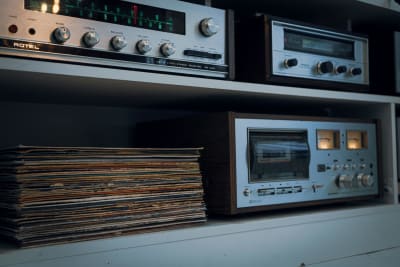
"For the dedicated audiophile, the distinction between an AV receiver and a stereo receiver isn't just about channel count; it's about sonic philosophy and how you prioritize the listening experience," states Dr. Evelyn Reed, a prominent acoustician and professor of audio engineering at the Metropolitan Institute of Technology. "AV receivers are engineered for an immersive, multi-dimensional soundscape, primarily for film and gaming. Stereo receivers, conversely, are honed for purity and precision in two-channel music reproduction. The critical decision hinges on whether your passion lies in cinematic immersion or unadulterated musical fidelity." The landscape of home audio equipment has long been bifurcated, presenting consumers with a fundamental choice: the versatile Audio Visual (AV) receiver or the purist Stereo receiver. This decision, often framed as music versus movies, is more nuanced than a simple binary. While AV receivers have ascended to dominance in the home theater market, promising a gateway to Dolby Atmos and DTS:X soundscapes, the enduring appeal of stereo receivers lies in their focused dedication to high-fidelity music playback. The choice, therefore, is not merely about features, but about a deep understanding of one's own listening priorities and how these devices are engineered to serve them. Historically, the advent of surround sound marked a significant divergence. Early home theater enthusiasts sought to replicate the cinematic experience, demanding systems that could deliver sound from multiple directions. This spurred the development of AV receivers, complex machines designed to decode intricate audio formats, manage multiple video and audio inputs, and power an array of speakers. Stereo receivers, meanwhile, remained the stalwart choice for music lovers, emphasizing two-channel amplification and signal clarity for an uncompromised stereo image. This foundational difference in design philosophy continues to shape the market today, with each type of receiver offering distinct advantages for specific use cases. The current market is awash with AV receivers boasting an ever-increasing number of channels and sophisticated processing capabilities. Manufacturers tout features like room correction software, which analyzes your room's acoustics and automatically calibrates speaker output for optimal performance, and support for the latest high-resolution audio streaming services. Many modern AV receivers also incorporate advanced digital-to-analog converters (DACs) and offer robust connectivity options, including numerous HDMI inputs, Wi-Fi, and Bluetooth. This comprehensive feature set makes them incredibly adaptable, capable of handling everything from a full-blown home theater to a sophisticated two-channel music system, often with the flick of a switch to engage 'Pure Direct' modes that bypass extraneous processing. However, the argument for stereo receivers remains compelling, particularly for those whose primary focus is music. The core principle is that by concentrating on two channels, stereo receivers can allocate more resources to amplifier quality and component selection. This often translates to a cleaner signal path, lower distortion, and a more dynamic and detailed musical presentation. When you purchase a stereo receiver at a comparable price point to an AV unit, you are typically investing in superior amplification and higher-grade circuitry dedicated solely to audio fidelity. This focused engineering can result in a more nuanced and impactful soundstage for music enthusiasts who value every subtle detail in their favorite tracks. The social media sphere and online audio forums buzz with debates on this very topic. Users often share their personal journeys, with many lamenting the perceived compromise when using a feature-rich AV receiver for music. "I upgraded to a top-tier AV receiver for movies, but my vinyl just doesn't sound as alive," laments one user on Reddit's r/audiophile subreddit, a sentiment echoed by many. Conversely, others defend the versatility of AV receivers, highlighting how modern units, when properly configured, can deliver excellent stereo sound, especially when utilizing their dedicated 'Pure Direct' modes. The discussion often highlights a generational divide, with younger users more accustomed to the all-in-one solutions offered by AV receivers, while older enthusiasts often champion the dedicated stereo setup. What many overlook in this discussion is the economic reality. The extensive feature set of an AV receiver—video switching, multi-channel decoding, network streaming, and often a built-in digital assistant—comes at a cost. Consumers are paying for that technological breadth. A stereo receiver, stripped of these complexities, can offer superior sonic performance for the same price because its design is inherently simpler and more focused. For instance, a $500 stereo receiver might feature a more robust power supply and higher-quality amplifier components than a $500 AV receiver, which has to spread its budget across video processing, network interfaces, and multiple output stages. This is a crucial factor for budget-conscious buyers seeking the best sound quality for their music. Ultimately, the path forward for the discerning listener involves introspection about listening habits. If cinematic immersion and gaming are paramount, an AV receiver is likely the superior choice, offering unparalleled flexibility and cutting-edge surround sound formats like Dolby Atmos. However, if your heart sings for the nuanced beauty of a string quartet or the raw energy of a rock band, a dedicated stereo receiver, with its unwavering focus on two-channel purity, might offer a more rewarding sonic journey. The best system is not the one with the most features, but the one that best aligns with your personal audio aspirations. Moving forward, the evolution of both receiver types will be worth monitoring. Manufacturers are increasingly exploring ways to bridge the gap, with some AV receivers offering enhanced stereo modes and audiophile-grade components. Simultaneously, stereo receivers are integrating more digital inputs and streaming capabilities, albeit with a continued emphasis on sound quality. The consumer's role in this evolving market will be to critically assess their needs and to seek out demonstrations that allow them to truly hear the difference these distinct philosophies make.
In Brief
Choosing between an AV and stereo receiver can dramatically impact your home audio experience. Explore how each is engineered for different listening priorities and discover which one truly fits your needs.Advertisement





Comments
No comments yet. Be the first to comment!