
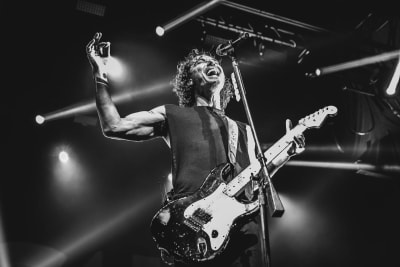
As Bruce Springsteen and the E Street Band continue their extensive global tour, a surprisingly persistent undercurrent of debate has emerged, not about the legendary performers' musical prowess or their extensive catalog, but about the very nature of artistic expression in the public sphere. Reports from numerous concert stops indicate that while fans flock to witness the iconic "Land of Hopes and Dreams" shows, a vocal segment of the audience, and observers alike, are questioning the artist's right to engage in "intense, direct and ongoing political criticism" during his performances. This friction highlights a perennial tension: where does the artist's responsibility to entertain end, and their freedom to speak begin? This isn't a new conversation. The demand for artists to "shut up and sing" resurfaces with predictable regularity whenever a prominent figure uses their platform to address contemporary social or political issues. However, the current Springsteen tour has amplified this debate, perhaps because of the Boss's deeply ingrained persona as a chronicler of the American experience, a voice for the working class, and a keen observer of the nation's triumphs and failures. For many, Springsteen's music has always existed in a space that embraces both patriotism and critique, a duality that critics now seem eager to dissect or dismiss. At its core, the "shut up and sing" argument often simplifies complex issues by demanding artists adhere to a narrow, prescribed role. It suggests that authenticity should be confined to the stage or studio, but not extend to the artist's personal or public pronouncements. This perspective implicitly asks performers to be palatable, to avoid discomfort, and to remain within clearly defined boundaries. Yet, for artists like Springsteen, whose career has been built on chronicling societal struggles and aspirations, such boundaries are not only arbitrary but antithetical to their artistic identity. His entire body of work is steeped in this tension between national pride and a clear-eyed, often critical, assessment of the nation's realities. This debate is particularly salient now due to the polarized political climate. In an era where cultural divides often mirror political ones, any perceived endorsement or critique from a beloved public figure can be amplified and weaponized. For fans who wish to escape politics at a concert, Springsteen's outspokenness can feel like an intrusion. Conversely, for those who see art as intrinsically linked to social commentary, his willingness to speak out is a vital aspect of his enduring appeal and relevance. The very fabric of American artistic tradition, from Woody Guthrie inscribing messages on his guitar to Pete Seeger transforming concerts into communal calls for change, is woven with threads of activism and dissent. Who is most affected by this debate? It's not just Springsteen or his fans. The "shut up and sing" sentiment echoes historical pressures placed upon marginalized voices – women, people of color, and other underrepresented groups – who have long been told to be quieter, less assertive, and more accommodating. As Texas Congresswoman Veronica Escobar recently pointed out, those demanding Springsteen remain silent are often those who have paid insufficient attention to his lyrical content, which has consistently grappled with themes of justice, economic hardship, and social inequality. The pressure to conform disproportionately impacts artists whose identities and experiences are already subject to scrutiny. What many analyses miss is that Springsteen's political engagement isn't an aberration; it's a continuation of his artistic mission. His songs have long explored the lives of ordinary Americans, their struggles with economic instability, their hopes for a better future, and their disillusionment with systemic failures. When he speaks out, he is not stepping outside his role as an artist; he is deepening his connection to the very themes that have defined his career. This consistency is precisely why his commentary resonates so powerfully, even if it alienates some. While the "shut up and sing" crowd may advocate for a more apolitical artistic output, potential solutions lie in fostering a more nuanced understanding of the artist-audience relationship. This involves acknowledging that artists, like all citizens, possess the right to free expression and that their creative output often reflects their lived experiences and observations. Furthermore, it requires recognizing that artistic engagement with politics is not a deviation but a long-standing tradition, integral to the cultural landscape. Promoting media literacy and encouraging deeper engagement with lyrical content, rather than superficial reactions, can help bridge this divide. Moving forward, the conversation around artists' political voices will undoubtedly continue to evolve. Audiences will need to grapple with their expectations of public figures in an increasingly interconnected world. Will we see a greater embrace of artists who integrate their personal convictions with their public performances, or will the pressure for conformity intensify? The enduring power of Springsteen's music suggests that authenticity, even when politically charged, will continue to find its audience, challenging us to think critically about the roles we assign to art and artists in society.
In Brief
Bruce Springsteen's current tour has sparked a renewed debate over artistic freedom and political expression, as fans and critics question his on-stage commentary.Advertisement
Comments
No comments yet. Be the first to comment!