
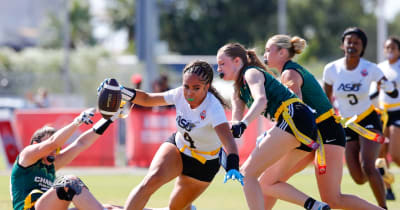
A thrilling touchdown catch in the closing seconds wasn't just a game-winning play for Arizona State receiver Rylen Bourguet; it was a symbol of a sport's burgeoning future. The inaugural Fiesta Bowl Flag Football Classic, held on ASU's campus, drew eight NCAA Division I teams, transforming a highly anticipated event into a tangible demonstration of women's flag football's surging popularity and its potential for sustained growth. This event marks a significant milestone, moving beyond sporadic showcases to a structured, competitive format that mirrors the dedication and resources now being funneled into women's athletics. While flag football has long been a popular recreational activity, its elevation to a recognized collegiate sport, complete with media attention and dedicated sponsorship, signals a critical shift. The contrast between this professionally organized tournament and the sport's more informal past is stark, highlighting how quickly the landscape is evolving. Data from the tournament itself underscores this momentum. An estimated 1,500 spectators, a considerable figure for a newly established collegiate event, redeemed free tickets to witness the action unfold over two days. The championship game between UCF and Florida, a hard-fought 19-7 victory for UCF, was broadcast on ESPNU, providing a national platform and reaching a wider audience than ever before. This level of exposure is crucial for attracting future talent, sponsors, and fans. While the majority of participating schools currently field flag football as a club sport, the winds of change are palpable. Only Alabama State reportedly offers scholarships in the sport, a statistic that is expected to shift dramatically as flag football gains traction and NCAA recognition. Organizers like Fiesta Bowl executive director Erik Moses expressed optimism, aiming for expansion to 12 or 16 teams in subsequent years, a testament to the overwhelming interest and success of this initial outing. The experience for the athletes was meticulously curated to mirror major sporting events. Beyond the on-field competition, participants enjoyed a dedicated media day, athlete gift packages, and amenities like food trucks and a DJ, creating an atmosphere of professional respect and excitement. This holistic approach aims to build a positive and memorable experience, fostering loyalty and advocacy among the players themselves. Social media platforms buzzed with highlights, player testimonials, and fan engagement throughout the tournament. Viral clips of impressive catches, strategic plays, and celebratory moments amplified the event's reach, connecting with a younger demographic and generating organic interest. The digital conversation not only showcased the athletic talent but also fostered a sense of community and excitement around the sport's rapid advancement. This collegiate surge is intrinsically linked to a broader global trend: the increasing visibility and investment in women's sports. The upcoming 2028 Los Angeles Olympics, featuring both men's and women's flag football competitions, serves as a powerful aspirational goal for athletes like Rylen Bourguet. This inclusion on the Olympic stage elevates flag football from a niche activity to an international sport, driving development and participation at all levels. The Fiesta Bowl tournament isn't merely an isolated sporting event; it represents a microcosm of a larger movement. As more institutions recognize the growing demand and potential for flag football, the trajectory points towards increased scholarship opportunities, more robust league structures, and greater professional pathways. The question is no longer *if* flag football will become a major collegiate sport, but rather *how quickly* it will integrate fully into the athletic fabric of universities nationwide. Looking ahead, attention will focus on which institutions will follow Alabama State's lead in offering scholarships and how quickly other major conferences will embrace flag football as an emerging sport. The continued success of events like the Fiesta Bowl Classic, coupled with the looming Olympic debut, will undoubtedly accelerate this transformation, setting new benchmarks for competition and athlete development in the coming years.
In Brief
A landmark collegiate tournament highlights the explosive growth of women's flag football, showcasing its transition from club status to a sport poised for national and international prominence.Advertisement




Comments
No comments yet. Be the first to comment!