
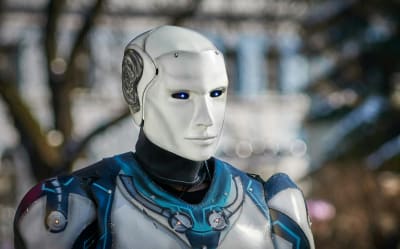
In a move signaling a dramatic pivot from its social media roots, Meta Platforms has quietly acquired Assured Robot Intelligence (ARI), a startup dedicated to creating sophisticated AI for humanoid robots. This isn't just about adding another gadget to a tech giant's portfolio; it represents a calculated gamble on the future of human-AI interaction, aiming to bring intelligent, physically capable machines directly into our homes. The acquisition closed Friday, with Meta confirming the startup's focus on AI that can "understand, predict and adapt to human behaviors in complex and dynamic environments," a critical capability for any robot meant to coexist with us. For years, Meta has poured billions into artificial intelligence research, envisioning AI as a foundational technology that will reshape computing. While AI-powered glasses and virtual assistants offer a glimpse into this future, the ARI acquisition points toward a more ambitious, tangible integration: robots that can perform physical tasks. This strategic expansion into robotics suggests Meta is preparing for a world where AI isn't just an abstract intelligence but a physical presence, capable of assisting with chores, providing companionship, or executing complex instructions in real-world settings. It's a profound shift, moving AI from the screen into the physical fabric of our daily lives. The timing of this acquisition places Meta squarely in the crosshairs of a burgeoning technological arms race. Elon Musk's xAI, through its ambitious Optimus robot project at Tesla, has already declared humanoid robots to be "the biggest product ever," forecasting an "insatiable" demand that could elevate Tesla into a trillion-dollar entity. Musk's pronouncements, delivered in May 2025, highlight the immense market potential tech titans see in domestic robotics. Meta's move suggests they believe the future isn't just about the smartest AI, but the smartest AI embodied in a physical form that can interact seamlessly with the human world. This competitive landscape extends beyond Meta and Tesla. Amazon, for instance, made its own foray into the humanoid robot market by acquiring Fauna in March. Meanwhile, developers in China are actively pursuing similar goals, indicating a global consensus among major tech players that life-sized, intelligent robots are the next frontier. The race is on to capture this emerging market, with each company leveraging its unique strengths – Meta its vast AI expertise and social graph data, Tesla its manufacturing prowess, and Amazon its extensive logistics and retail network – to lead the charge. The core challenge, and Meta's apparent focus with ARI, lies in developing AI that moves beyond mere task execution. True human-robot integration demands machines that can interpret nuanced human cues, anticipate needs, and navigate unpredictable home environments safely and intuitively. ARI's specialization in AI designed for complex, dynamic human spaces suggests Meta is prioritizing the development of robots that can function not just as tools, but as collaborators. This level of adaptability is crucial for overcoming the widespread skepticism and practical hurdles that have historically plagued advanced robotics. This story is resonating now because it taps into a deep-seated human fascination with intelligent machines and the promise of automated assistance. For decades, science fiction has painted vivid pictures of helpful household robots, and today's advancements in AI and robotics are making those visions seem increasingly plausible. The sheer scale of investment by companies like Meta, coupled with the bold claims from figures like Elon Musk, creates a sense of imminent change. People are captivated by the idea that the drudgery of daily chores could be outsourced to machines, or that advanced AI could offer new forms of companionship and support. The implications for the short term are likely to be continued research and development, with prototypes and limited-release tests emerging. We might see early versions of these robots appearing in controlled environments or specialized roles before they become widely available consumer products. The long-term vision, however, is transformative: a future where intelligent robots are commonplace, assisting with elder care, childcare, household management, and a myriad of other tasks, fundamentally altering the structure of daily life and the nature of work. What makes this particular moment significant is the convergence of mature AI capabilities with the drive for physical embodiment. Unlike previous generations of robots, which were often limited to industrial settings or simplistic programmed movements, today's AI can learn, adapt, and reason. This leap in intelligence, combined with advances in sensor technology and actuator design, makes the prospect of truly useful humanoid robots more realistic than ever before. Meta's acquisition of ARI is a testament to this convergence, indicating a strategic bet that the fusion of advanced AI and physical form is the key to unlocking the next era of technology. Looking ahead, the critical factors to watch will be the pace of development in AI's ability to handle real-world ambiguity, the ethical and safety frameworks established for domestic robots, and the public's willingness to integrate these machines into their most intimate spaces. The success of Meta's venture, and indeed the entire field of domestic robotics, will hinge on overcoming not just technical challenges, but also societal and psychological barriers.
In Brief
Meta's acquisition of Assured Robot Intelligence marks a significant shift, signaling a race to integrate advanced AI into home-based humanoid robots. This move places the tech giant in direct competition with rivals like Tesla and Amazon, promising to redefine human-AI interaction.Advertisement





Comments
No comments yet. Be the first to comment!