
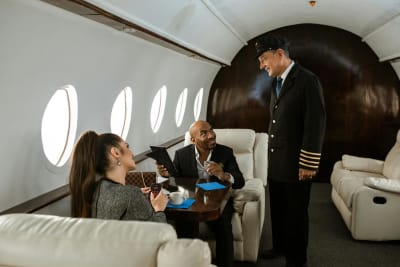
"The notion that business class is solely for the corporate road warrior is rapidly becoming a relic of the past," observes Dr. Eleanor Vance, a leading aviation industry analyst. "We're witnessing a profound recalibration of who is filling those coveted premium seats, driven by a confluence of economic pressures and evolving traveler expectations." For decades, the premium cabins of airliners served a distinct purpose: to offer a comfortable and productive environment for business professionals. These travelers prioritized arriving at their destinations refreshed and ready for crucial meetings, making the extra legroom, enhanced service, and lie-flat seats a non-negotiable expense. The economic calculus for corporations was clear: invest in employee comfort to maximize productivity and secure deals. This established order, however, has begun to fray at the edges, particularly as global economic uncertainties have prompted many companies to tighten their travel budgets. The most striking indicator of this transformation lies in the demographic shift within these premium cabins. Instead of the usual contingent of executives and sales representatives, flight attendants now report an increasing presence of individuals and families on vacation. This trend is not anecdotal; data from international premium travel shows a significant uptick. In 2024 alone, over 116.9 million passengers chose premium international travel, marking an 11.8% increase – a rate substantially outpacing economy class growth during the same period. This suggests a fundamental change in how premium travel is perceived and utilized. Airlines, acutely aware of these market dynamics, have responded by expanding their premium offerings. United Airlines, for instance, reported flying a record 27.4 million premium seats in 2025, accounting for 12% of their total seat capacity. This strategic expansion has not gone unnoticed on their balance sheets, with premium revenue seeing a robust 9% surge in the fourth quarter and an 11% increase for the entire year. American Airlines has mirrored this approach, increasing its premium seat inventory by a substantial 16% since 2019, while its economy class saw a more modest 5% expansion over the same timeframe. These figures underscore a deliberate effort to capture a new wave of premium customers. The key driver behind this expansion is the burgeoning segment of leisure travelers opting for business class. Specific figures paint a vivid picture: Qantas Regional GM for the UK, Europe, and Africa, Darsh Chapman, noted that on flights departing London, approximately 70% of passengers occupying business class seats are now leisure travelers. This percentage climbs even higher in premium economy, reaching an impressive 80%. These aren't just incremental shifts; United Airlines' internal data, as reported by the aviation blog View From The Wing, indicates that the representation of leisure travelers in first and business class has doubled since 2019. Furthermore, this influx of leisure passengers is altering booking patterns. Delta Air Lines has observed that more customers are now paying full fare for premium cabins rather than relying on upgrades. A staggering 75% of Delta's first-class seats are now filled by full-paying customers, a dramatic contrast to the mere 12% recorded in 2009. This indicates a growing willingness among leisure travelers to allocate a larger portion of their vacation budgets towards the enhanced comfort and experience offered by premium air travel, even at full price. The implications of this democratization of premium travel extend beyond airline revenue. Cabin crews are adapting to a new passenger profile. They are increasingly serving travelers who may be unfamiliar with the nuances of premium service, requiring a different approach to passenger engagement and expectation management. This necessitates a more personalized service model, moving beyond the efficiency-focused interactions common with seasoned business travelers. The onboard experience itself is also evolving, with airlines continually innovating their premium products to appeal to this broader, more diverse clientele. This evolving landscape presents both opportunities and challenges for the aviation industry. While the increased demand for premium seats offers significant revenue potential, airlines must carefully balance service delivery with operational costs. The challenge lies in maintaining the exclusivity and perceived value of business class while catering to a wider audience whose expectations may differ. The long-term success will hinge on airlines' ability to adapt their service models and product offerings to meet the sophisticated demands of this new era of premium leisure travel. Looking ahead, the trajectory of this trend warrants close observation. Will airlines continue to prioritize premium cabin expansion, or will economic headwinds necessitate a recalibration? The passenger experience, from booking to disembarkation, will undoubtedly continue to be shaped by this ongoing transformation, making the premium cabin a critical battleground for airline competitiveness in the years to come.
In Brief
Aviation's premium cabins are undergoing a significant shift, with leisure travelers increasingly filling seats once dominated by business professionals. This trend is reshaping airline strategies and in-flight experiences.Advertisement




Comments
No comments yet. Be the first to comment!