
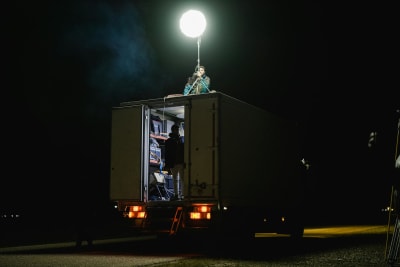
The quiet anticipation surrounding an independent film's journey from international festival circuit to American screens often begins with a subtle shift – a deal struck behind closed doors at a bustling film market, a signal that a unique vision has found its champion. For "Light Pillar," the debut feature from Chinese director Xu Zao, that moment arrived at the Cannes Film Market, where Greenwich Entertainment secured the U.S. distribution rights. This acquisition marks not just a win for the filmmakers but a potential gateway for a distinctive cinematic work, blending hand-drawn animation with live-action, to reach a new audience. The film's narrative centers on Zha, a janitor adrift in the melancholic aftermath of a defunct film studio. His escape from this stark reality isn't to a sun-drenched paradise, but into the glowing ether of the virtual world. Here, he cultivates an online romance and nurtures a grander ambition: a journey to the moon. This dichotomy – the grimy, tangible decay of the studio juxtaposed with the boundless, often illusory, potential of the digital realm – forms the thematic core of "Light Pillar." The story takes a poignant turn as Zha's digital existence unravels, mirroring the physical demolition of the very studio that once housed his dreams, a process that is then repurposed into a backdrop for a science fiction production, blurring the lines between lived experience and constructed narrative. Why does this acquisition matter now? In an era saturated with blockbuster franchises and algorithm-driven content, the acquisition of a hybrid, 2D animated and live-action independent film signals a continued appetite for unconventional storytelling. Greenwich Entertainment, known for its curated slate that often includes thoughtful dramas and documentaries, is betting on "Light Pillar" to resonate with audiences seeking something beyond the mainstream. The film's world premiere at the Berlinale Film Festival, a prestigious platform known for championing emerging talent and diverse cinematic voices, lent it significant international validation. Its inclusion in the festival's "Perspectives" section further underscored its artistic ambition and unique perspective. The impact of "Light Pillar" will be felt most keenly by those who seek out cinema that challenges norms and explores the human condition through less conventional means. For director Xu Zao and producer Lu Xiaowei of Shanghai-based Fengduan Pictures, this U.S. release is the culmination of a significant creative endeavor. Veteran actor Da Peng, who lends his presence to the live-action segments and also served as executive producer, adds a layer of established talent to the project. The film's hybrid approach, using hand-drawn animation for Zha's mundane reality and live-action for his virtual escapades, promises a visually arresting experience that could appeal to both animation enthusiasts and fans of introspective drama. Public reaction and social media buzz, while still nascent for a film awaiting wide release, are likely to focus on its innovative format and thematic relevance. The concept of retreating into virtual worlds to escape harsh realities is a narrative trope that has gained significant traction in contemporary discourse, amplified by the pervasive influence of social media and online gaming. "Light Pillar" taps into this zeitgeist, offering a visual and emotional exploration of escapism, digital connection, and the often-painful intersection of our online personas with our offline lives. The film's message, as articulated by Xu Zao and Lu Xiaowei, about embracing dreams and aiming for the stars, even amidst disillusionment, holds universal appeal. This narrative arc is not isolated; it connects to a larger global trend of exploring the complexities of the digital age. From the rise of metaverses to the increasing integration of virtual reality in everyday life, society is grappling with the implications of our digital existences. "Light Pillar" offers a cinematic lens through which to examine these shifts, questioning the nature of reality, connection, and fulfillment in an increasingly mediated world. The film's exploration of a character finding solace and ambition in a virtual realm, only to have it crumble, serves as a potent metaphor for the fragilities and possibilities inherent in our technologically advanced society. Potential solutions to the challenges presented by the film's themes – the allure of escapism, the potential for digital isolation, and the search for genuine connection – are as varied as the narratives that explore them. While "Light Pillar" itself is a work of art and not a policy paper, its success could encourage further exploration of how hybrid storytelling can address contemporary anxieties. The film's embrace of hand-drawn animation, a technique often associated with a more personal and tactile artistic approach, could also signal a counter-movement against hyper-realistic digital rendering, emphasizing the power of human artistry. One specific, poignant fact is that the film's narrative unfolds against the backdrop of a studio's physical demolition, a potent symbol of obsolescence and transformation. Furthermore, the deal was negotiated by Jasper Basch for Greenwich, with Sebastien Chesneau of Cercamon representing the filmmakers, highlighting the crucial role of intermediaries in bringing international cinema to new markets. Greenwich Entertainment’s recent slate, including "The Critic" starring Ian McKellen and the upcoming animated film "Jinsei," demonstrates a commitment to diverse and artistically driven projects. Looking ahead, audiences will be keen to see how "Light Pillar" performs upon its theatrical release early next year. Its reception could influence future distribution decisions for similar independent, hybrid-format films from international markets. The critical response and audience engagement will be closely watched, particularly its ability to capture the imagination of viewers navigating their own relationships with technology and reality in a rapidly evolving world. The success of "Light Pillar" could pave the way for more unconventional animated narratives to find their footing in the U.S. market.
In Brief
An independent animated film blending live-action and hand-drawn artistry, 'Light Pillar' has secured U.S. distribution. The movie explores themes of virtual escapism and reality's grip.Advertisement





Comments
No comments yet. Be the first to comment!