
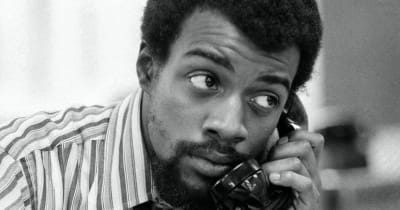
The recent passing of Ronald Smothers, a veteran journalist whose career illuminated critical junctures in American history, marks more than the end of an era for his profession. It is a moment to reflect on the vital role reporters play in documenting societal shifts, particularly those involving race and civil rights. Smothers, who spent 35 years with The New York Times, was not merely an observer; he was a chronicler of change, embedding himself in the fabric of communities grappling with profound transformation. His journalistic journey began during a period of intense racial upheaval across the United States. The mid-20th century was a crucible for civil rights, marked by landmark legislation like the Civil Rights Act of 1964 and the Voting Rights Act of 1965, yet these legal victories were hard-won and often violently contested. Smothers, as a Black journalist working in that charged atmosphere, provided an indispensable perspective, capturing the raw emotion and the determined struggle for equality that defined the era. His early work often focused on the persistent inequalities and the burgeoning movements seeking to dismantle them, offering readers an unvarnished look at the nation's conscience. During his tenure, Smothers covered significant events that shaped the national narrative. He served as The Times' Atlanta bureau chief, a pivotal role during a time when the South remained a focal point for both racial progress and resistance. The bombing of the 16th Street Baptist Church in Birmingham, Alabama, in 1963, a horrific act of domestic terrorism that claimed the lives of four young girls, was one such event he likely witnessed or reported on, symbolizing the brutal opposition to desegregation. His reporting provided a human face to these tragedies and triumphs, moving beyond statistics to tell the stories of individuals caught in the crosscurrents of history. Smothers' career spanned nearly four decades, a testament to his dedication and the evolving media landscape. He witnessed the transition from the era of intense protest to a period where African Americans began to achieve greater visibility and power in various sectors, from politics to culture. His reporting evolved with these changes, documenting not just the fight for basic rights but also the complexities of integration, the challenges of maintaining momentum, and the emergence of new leaders and movements. This comprehensive view offered a nuanced understanding of the long arc of the civil rights struggle and its enduring impact. The digital age has dramatically altered how news is disseminated and consumed, with social media platforms now serving as instant conduits for information and public discourse. While Smothers operated in a different media ecosystem, his commitment to rigorous, in-depth reporting serves as a crucial benchmark. The immediate, often unverified, flow of information online stands in stark contrast to the painstaking verification and contextualization that characterized Smothers' work. Public reaction to news today is often immediate and amplified by social media, sometimes leading to rapid consensus or polarization, a phenomenon far removed from the slower, more deliberate public discourse of his time. What Smothers' legacy underscores for today's media is the enduring value of deep investigative journalism and the importance of diverse voices. In an age awash with fleeting digital content, the ability to provide context, historical perspective, and verified facts is more critical than ever. His career demonstrated how a journalist can act as a vital witness, holding a mirror to society's most pressing issues and ensuring that important stories are not forgotten. This role is indispensable for a functioning democracy and for fostering informed public understanding. The future outlook for journalism, especially concerning the coverage of social justice and political discourse, demands a similar dedication to truth and context. As society continues to grapple with issues of inequality, identity, and representation, the need for reporters who can navigate complex histories and provide nuanced analysis will only grow. The challenge for news organizations is to cultivate and support journalists who possess both the skills for traditional reporting and the understanding to contextualize events in a rapidly changing world. Smothers' career provides a roadmap for this vital endeavor. In navigating the current landscape, readers can actively seek out news sources that prioritize in-depth reporting and historical context. Supporting independent journalism, engaging critically with information encountered online, and demanding accountability from media outlets are all ways individuals can contribute to a healthier information ecosystem. Understanding the historical roots of contemporary issues, as illuminated by journalists like Smothers, empowers a more informed and engaged citizenry, capable of discerning fact from noise and contributing meaningfully to societal progress.
In Brief
A look back at the impactful career of journalist Ronald Smothers, whose decades of reporting chronicled America's struggle for civil rights and social change, offering vital context for today's society.Advertisement





Comments
No comments yet. Be the first to comment!