
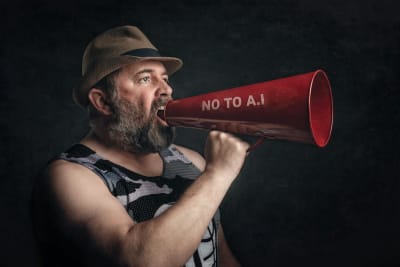
Vice President JD Vance delivered a stark warning to nearly 900 graduating cadets at the U.S. Air Force Academy this week, urging them to prioritize human judgment over artificial intelligence in the increasingly complex theater of modern warfare. Speaking against a backdrop of growing public anxiety surrounding AI's rapid development, Vance implored the future officers to view technology as a tool to augment, not replace, their critical decision-making capabilities. His address highlighted a nuanced perspective, acknowledging AI's potential benefits while foregrounding profound ethical concerns, particularly when applied to lethal force. Vance's remarks come at a critical juncture, as nations globally grapple with the implications of AI on military strategy and international security. The integration of AI into defense systems promises enhanced speed, precision, and operational efficiency. However, the vice president's caution signals a deeper apprehension: the potential erosion of human control and moral accountability in life-or-death scenarios. He specifically asked the cadets to be "jealous and selfish about your role as the decision-maker in warfare," emphasizing that their human intellect and moral compass are irreplaceable assets that technology cannot replicate. The Vice President drew a parallel to a recent theological document issued by Pope Leo XIV, which also cautioned against the unbridled advancement of artificial intelligence. Vance referenced the pontiff's work in an interview with NBC News and incorporated it into his speech, suggesting a growing consensus across diverse sectors about the need for ethical guardrails in AI development. This alignment between political leadership and religious authority underscores the gravity of the concerns being raised, framing the debate not merely as a technological challenge but as a fundamental question of human values. Historically, Vance has been a vocal proponent of the burgeoning AI industry, having previously advocated for minimal regulatory intervention during his time in venture capital. However, recent public opinion shifts, with a significant portion of the electorate expressing unease about AI's impact on employment and societal structures, appear to have prompted a more cautious public stance. This evolving perspective suggests a recognition that while AI offers economic opportunities, its application in sensitive domains like national security demands a more circumspect approach. Vance articulated his primary concern directly: "the thing I worry about most with AI is how it will change warfare." This statement encapsulates the tension between embracing technological progress and safeguarding against its potential misuse. He stressed that AI's influence extends beyond the battlefield, touching upon workforce skills, resource distribution, and even interpersonal relationships. Yet, it is the specter of autonomous warfare, where algorithms might dictate combat decisions, that appears to weigh most heavily on his mind, prompting a call for "moral leadership to think through those questions." His address also subtly addressed the contemporary political climate surrounding AI discourse, referencing the jeers sometimes directed at commencement speakers discussing the technology. Vance used his position as Vice President to preemptively defuse potential criticism, asserting that his warnings stem from a place of genuine concern for national security and human agency, rather than a superficial engagement with a trending topic. This was an attempt to lend weight and credibility to his cautionary message. The economic implications of AI in warfare are vast, promising to reshape defense budgets and the global arms race. Nations investing heavily in AI-powered military technologies may gain a significant strategic advantage, potentially leading to new forms of deterrence or, conversely, escalating existing tensions. The ethical quandaries, however, are equally profound. The prospect of AI systems making targeting decisions without direct human oversight raises critical questions about accountability, the potential for unintended escalation, and the very nature of combat. Looking ahead, the challenge lies in developing frameworks that harness AI's capabilities for defense while ensuring human control remains paramount. This will likely involve significant investment in AI ethics research, the establishment of international norms and treaties governing autonomous weapons systems, and continuous training for military personnel to navigate the complexities of human-AI collaboration on the battlefield. The Air Force Academy cadets are at the vanguard of this transformation, and their commitment to maintaining human judgment will be crucial in shaping the future of warfare.
In Brief
Vice President JD Vance urged Air Force cadets to prioritize human judgment over AI in warfare, citing ethical concerns and drawing parallels to papal warnings. His address highlights growing anxieties about technology's role in national security and the need for moral leadership.Advertisement





Comments
No comments yet. Be the first to comment!