
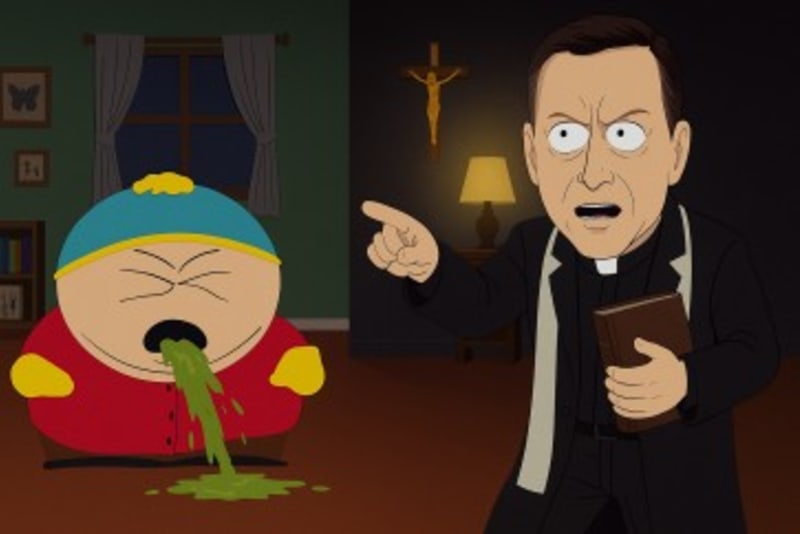

Denver, Colo. — In a fresh instalment of South Park, the long-running satire series has fired its comedic cannons at two very different corners of contemporary culture: the baffling “67” slang phenomenon, and the tech mogul Peter Thiel’s alleged obsession with the Antichrist. The episode, released over the weekend, has already triggered chatter online for its brazen mixing of pop culture, paranoia, and theological speculation.
Context & Background
The “67” trend—an enigmatic slang term which has swept parts of social media—is lampooned in the episode as a running gag that bewilders the characters and drives Cartman to repeated bouts of vomiting whenever the term is mentioned. According to previews, the show frames “67” as a viral affectation that has become both meaningless and overhyped. Yahoo News

Meanwhile, the segment featuring Peter Thiel is structured as a horror parody (evoking The Exorcist) in which a fictionalized version of Thiel becomes increasingly obsessed with uncovering the meaning of “67,” pleading dramatically:
“Tell me what it means … You will tell me the significance!” Yahoo News
By interweaving the two, the writers posit a surreal scenario in which a billionaire becomes haunted by linguistic mania and apocalyptic obsession in equal measure.
To understand the satire fully, it helps to know what’s happening in the real world. Over recent months, Peter Thiel has stirred controversy by publicly lecturing on the Antichrist—delivering private, invitation-only talks that blend theology, politics, and technocratic speculation. Gizmodo+2Inc.com+2 Some attendees say he has argued that fear of technological progress may itself be a step toward authoritarian apocalypse. Inc.com+2WIRED+2
In at least one lecture, Thiel reportedly claimed:
“The Antichrist hasn’t arrived yet, but if we keep moving in that direction of being afraid of technological progress, that’s going to lead the Antichrist to appear.” Inc.com
However, critics observe that Thiel’s own actions—such as funding powerful surveillance technologies and dominant AI platforms—raise questions about whether he is simply theorizing or wading into the role of power himself. WIRED+2Know Your Meme+2
Balanced Reporting
It is important to underline that nothing in South Park’s portrayal constitutes a factual statement about Peter Thiel’s beliefs—this is satire, not documentary. The show’s version of Thiel is a fictional exaggeration. At the same time, the real Thiel has not publicly confirmed that he believes himself to be the Antichrist; his public comments remain vague and teeter between metaphor and literalism. Know Your Meme+2WIRED+2
Supporters of Thiel argue his talks are an intellectual curiosity—framing existential threats in dramatic religious language. Detractors contend this rhetoric may serve to cloak a more authoritarian vision of technology and control. WIRED+2Inc.com+2
Conclusion & Next Steps
The South Park episode is likely to prompt renewed discussion among cultural commentators, tech critics, and religious thinkers about how we interpret elite narratives in the digital age. It may also push some viewers who had not followed Thiel’s Antichrist lectures to dig into what he has really said—and what remains speculative.
Legally, there is no cause for action: satire is a protected form of expression in the U.S., especially on cultural figures. But socially, the episode may raise the heat on Thiel’s public image, prompting tech media to probe whether his apocalyptic framing is purely rhetorical or something deeper.
As the season continues, audiences will be watching to see whether South Park maintains this high-wire blend of internet slang critique and theological mockery—and whether Thiel or his supporters respond in kind.




Comments
No comments yet. Be the first to comment!